Photojournalistic report produced in Kathmandu, Nepal, covering the protest of loan shark victims — known locally as Meter-Byaj.
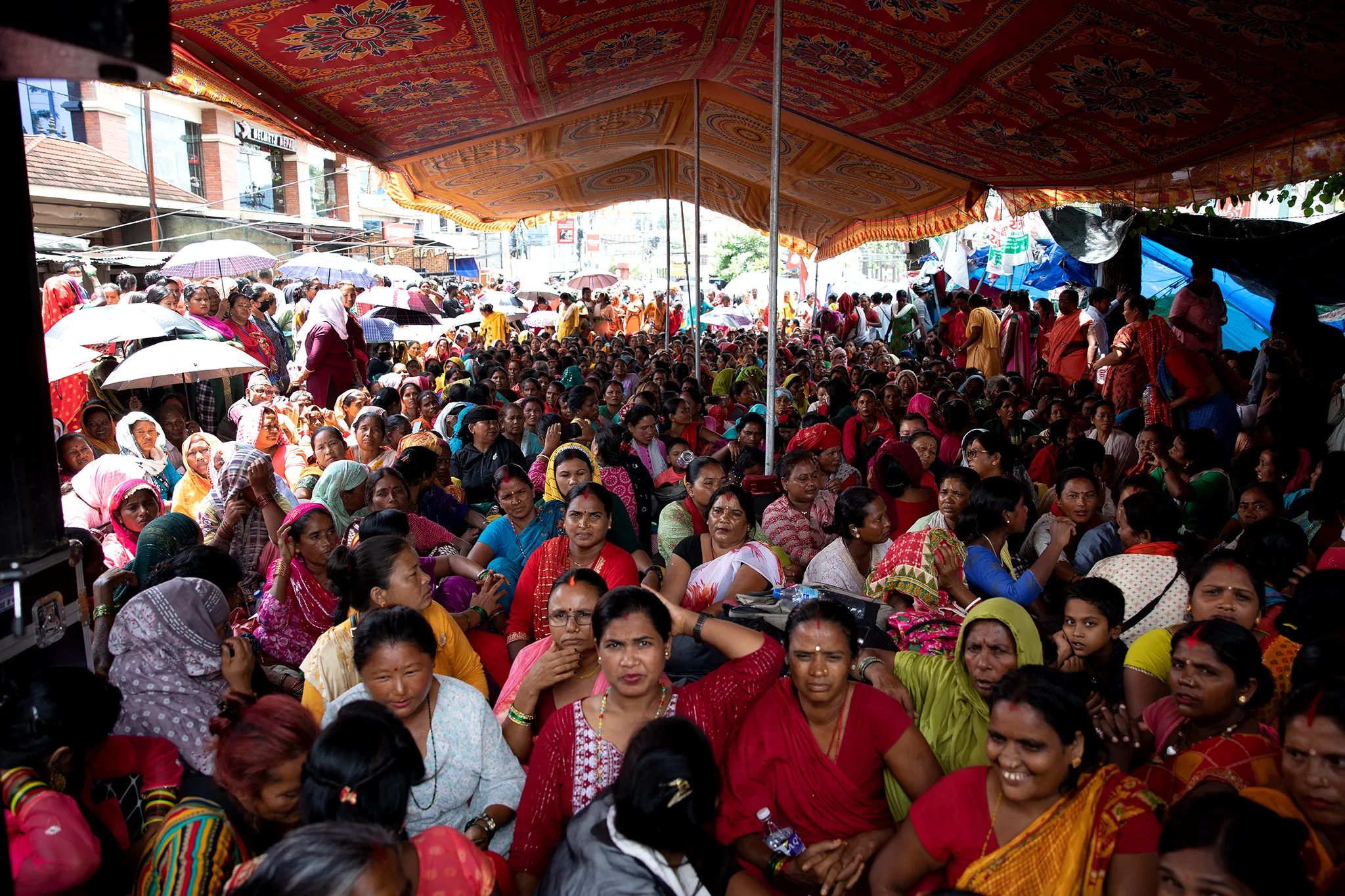
On July 31st, 2023, hundreds of people gathered at Shantibatika and Maitighar, in Kathmandu, demanding that the government take action. Usury had become a serious social problem in Nepal: loan sharks grant loans at abusive interest rates to people in economically vulnerable situations, increasing the amounts over time and creating a cycle of inescapable debt — with intimidation, threats and coercion along the way.
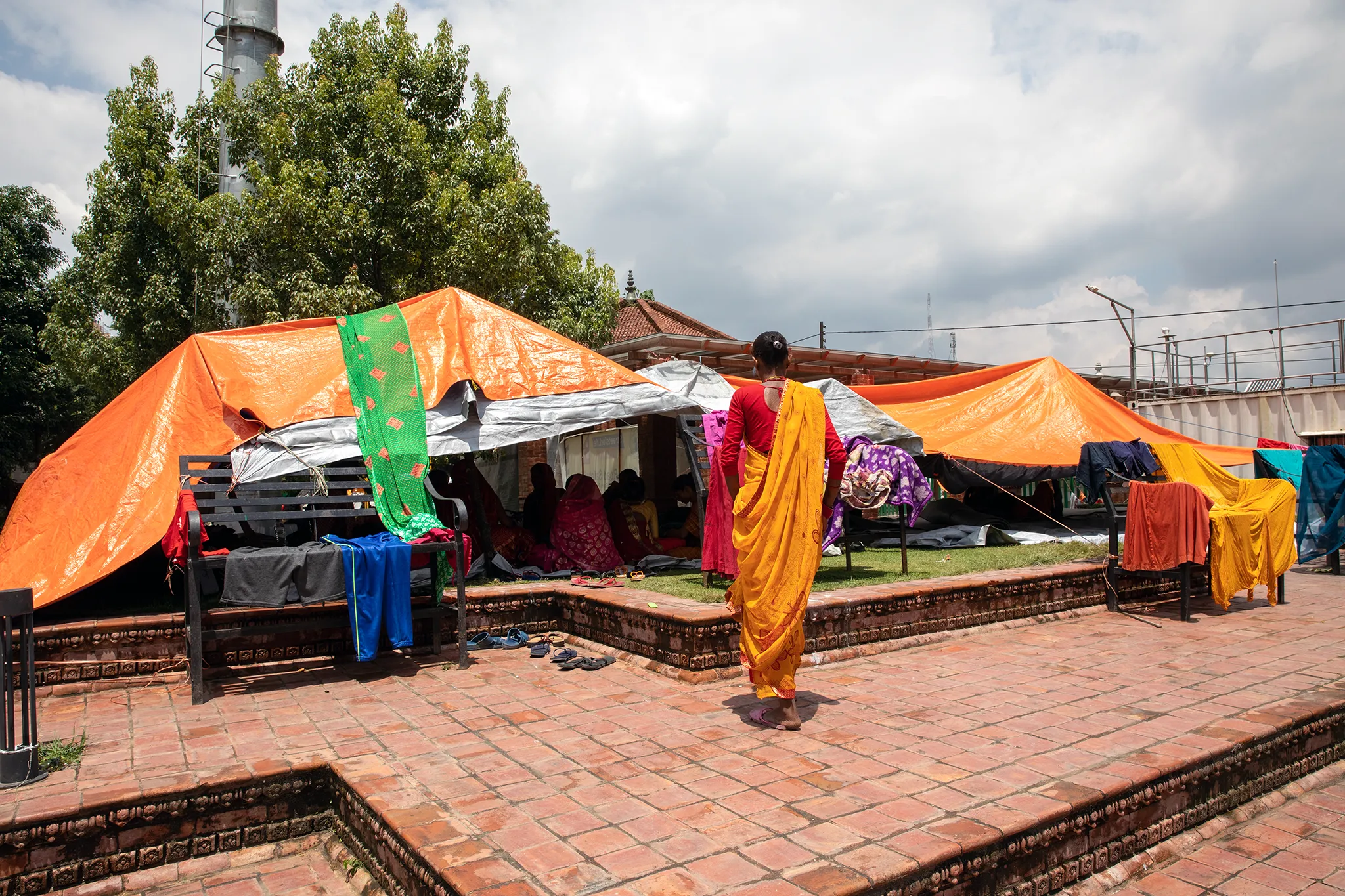
They turned Santibatika Ratnapark into their home. They pitched tents, slept together, cooked, washed and hung clothes on ropes spread across the park. They had no intention of giving up.
To be able to photograph, I relied on the help of a local journalist who communicated my presence to the people and the purpose of the work. Despite the language barrier, through gestures and the occasional help of translators, I was guided through the spaces and the people were completely at ease with my presence. I photographed inside the tents, during meals, in the tasks of everyday life. When the moment of the peaceful protest arrived — surrounded by police, mainly for traffic control — I accompanied them and documented it.
Recently, the Nepalese Parliament passed a law criminalising usury, providing for prison sentences of up to seven years and fines of 70,000 rupees. For those who camped in that park, it was a victory. But the struggle continues.
This report was published in Lens Magazine in August 2023, edition n.º 107, and in several Nepalese newspapers, namely Enewspolar, Ehimalaya and Myrepública.
Photojournalistic report produced in Kathmandu, Nepal, covering the protest of loan shark victims — known locally as Meter-Byaj.
On July 31st, 2023, hundreds of people gathered at Shantibatika and Maitighar, in Kathmandu, demanding that the government take action. Usury had become a serious social problem in Nepal: loan sharks grant loans at abusive interest rates to people in economically vulnerable situations, increasing the amounts over time and creating a cycle of inescapable debt — with intimidation, threats and coercion along the way.
They turned Santibatika Ratnapark into their home. They pitched tents, slept together, cooked, washed and hung clothes on ropes spread across the park. They had no intention of giving up.
To be able to photograph, I relied on the help of a local journalist who communicated my presence to the people and the purpose of the work. Despite the language barrier, through gestures and the occasional help of translators, I was guided through the spaces and the people were completely at ease with my presence. I photographed inside the tents, during meals, in the tasks of everyday life. When the moment of the peaceful protest arrived — surrounded by police, mainly for traffic control — I accompanied them and documented it.
Recently, the Nepalese Parliament passed a law criminalising usury, providing for prison sentences of up to seven years and fines of 70,000 rupees. For those who camped in that park, it was a victory. But the struggle continues.
This report was published in Lens Magazine in August 2023, edition n.º 107, and in several Nepalese newspapers, namely Enewspolar, Ehimalaya and Myrepública.