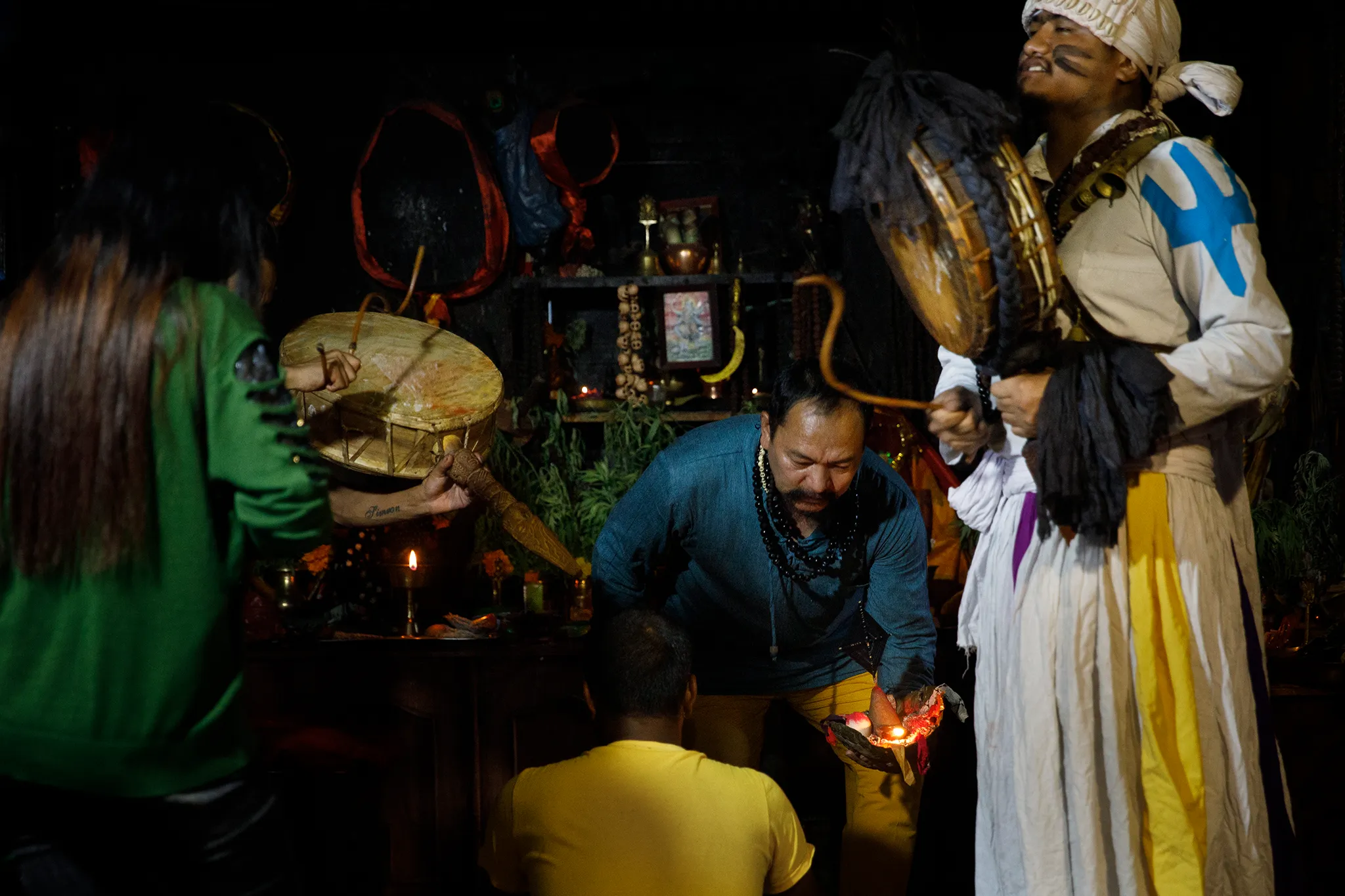
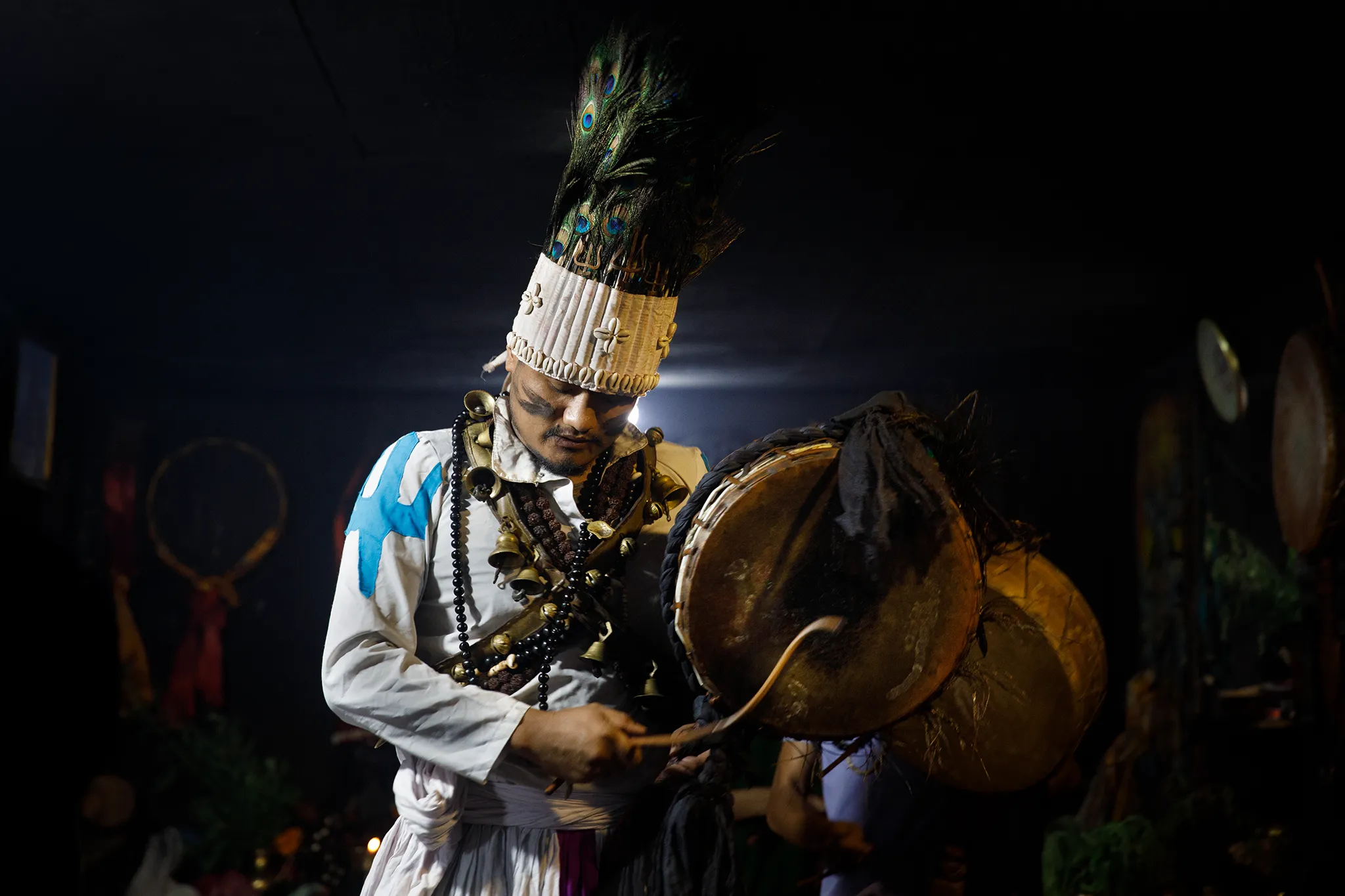
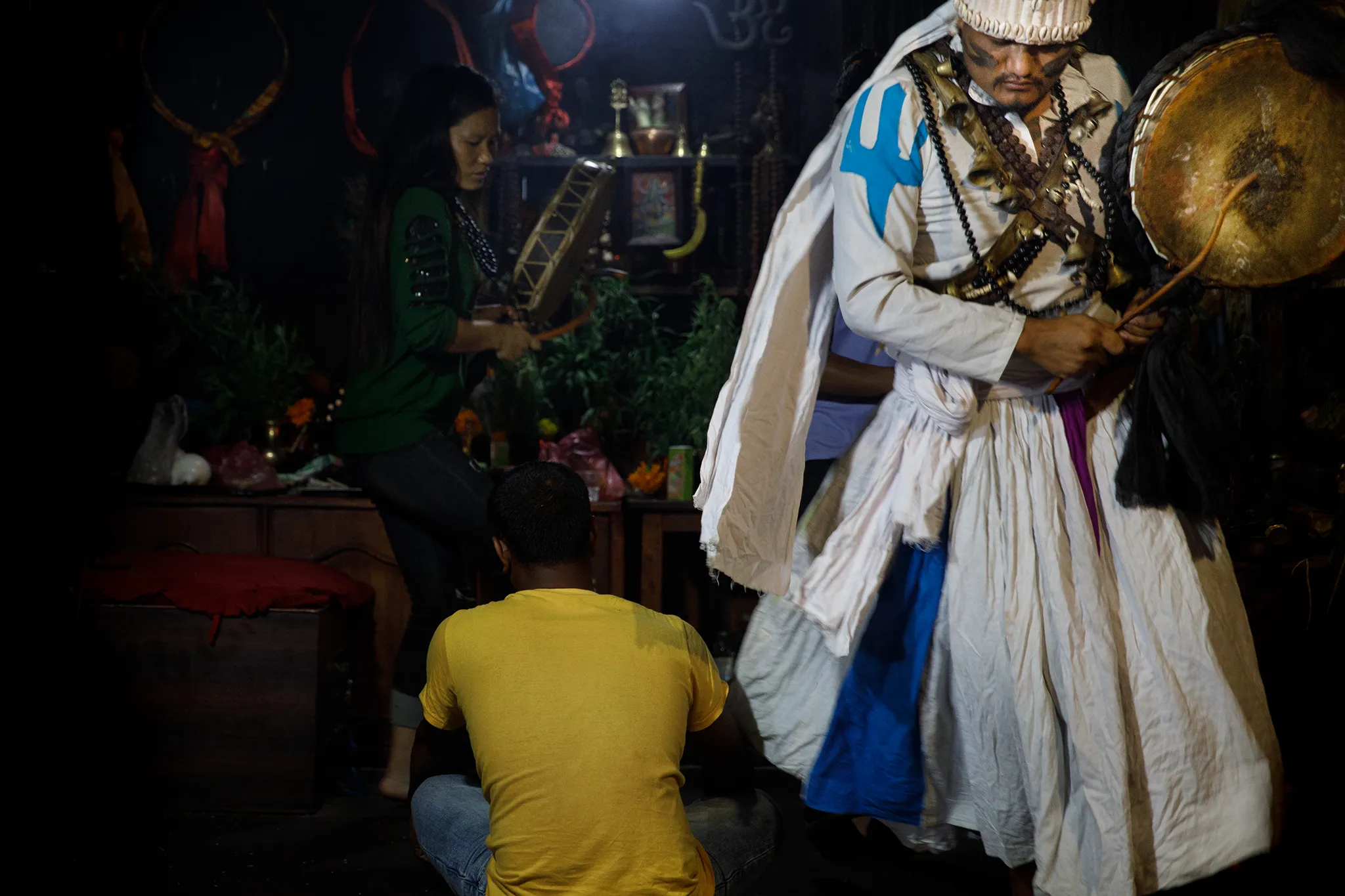
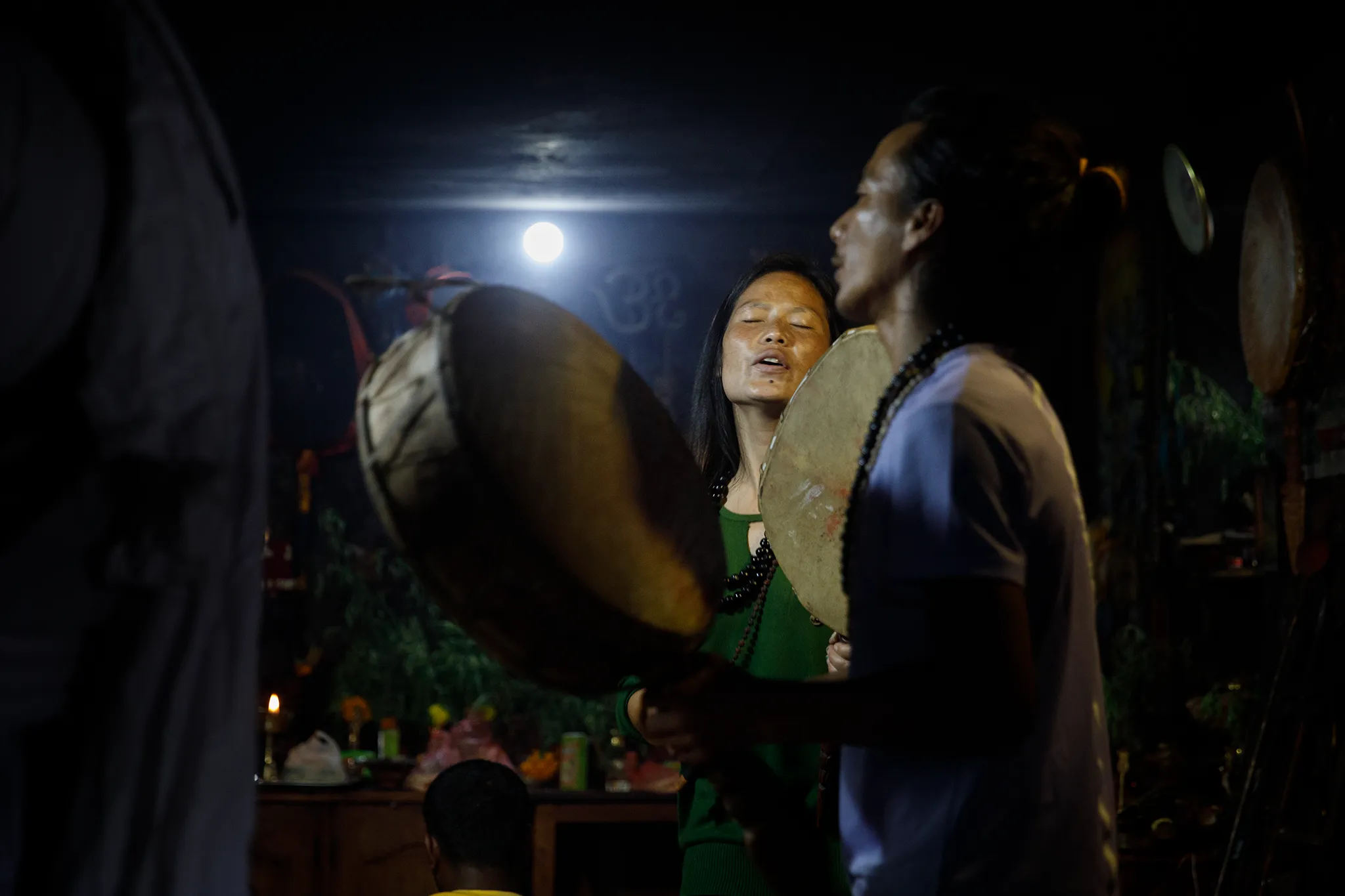
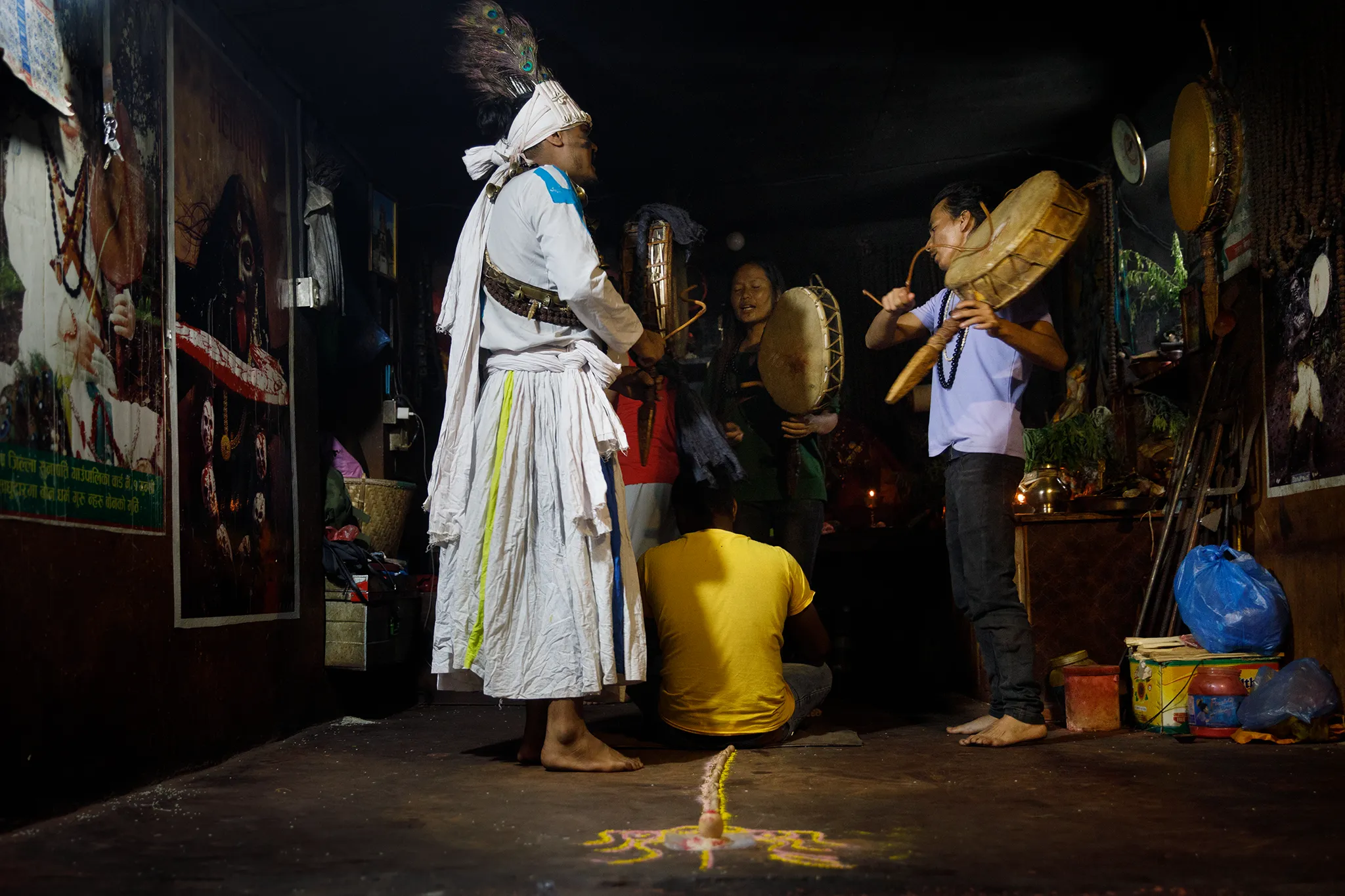
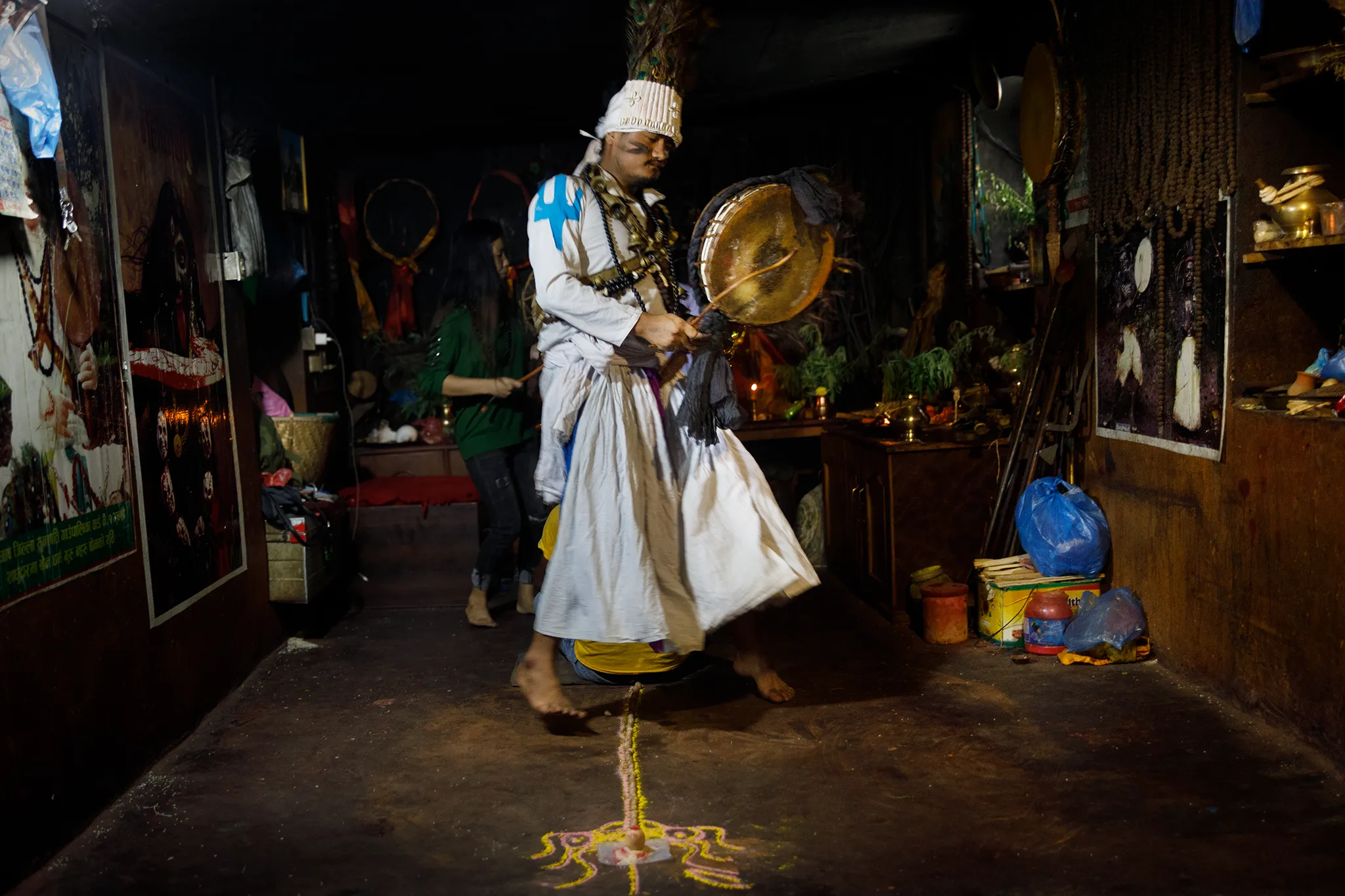
Shamanic Ritual is a documentary photography project produced in Kathmandu, Nepal, about the ancestral shamanic practices of the Jhankris — the Nepalese shamans.
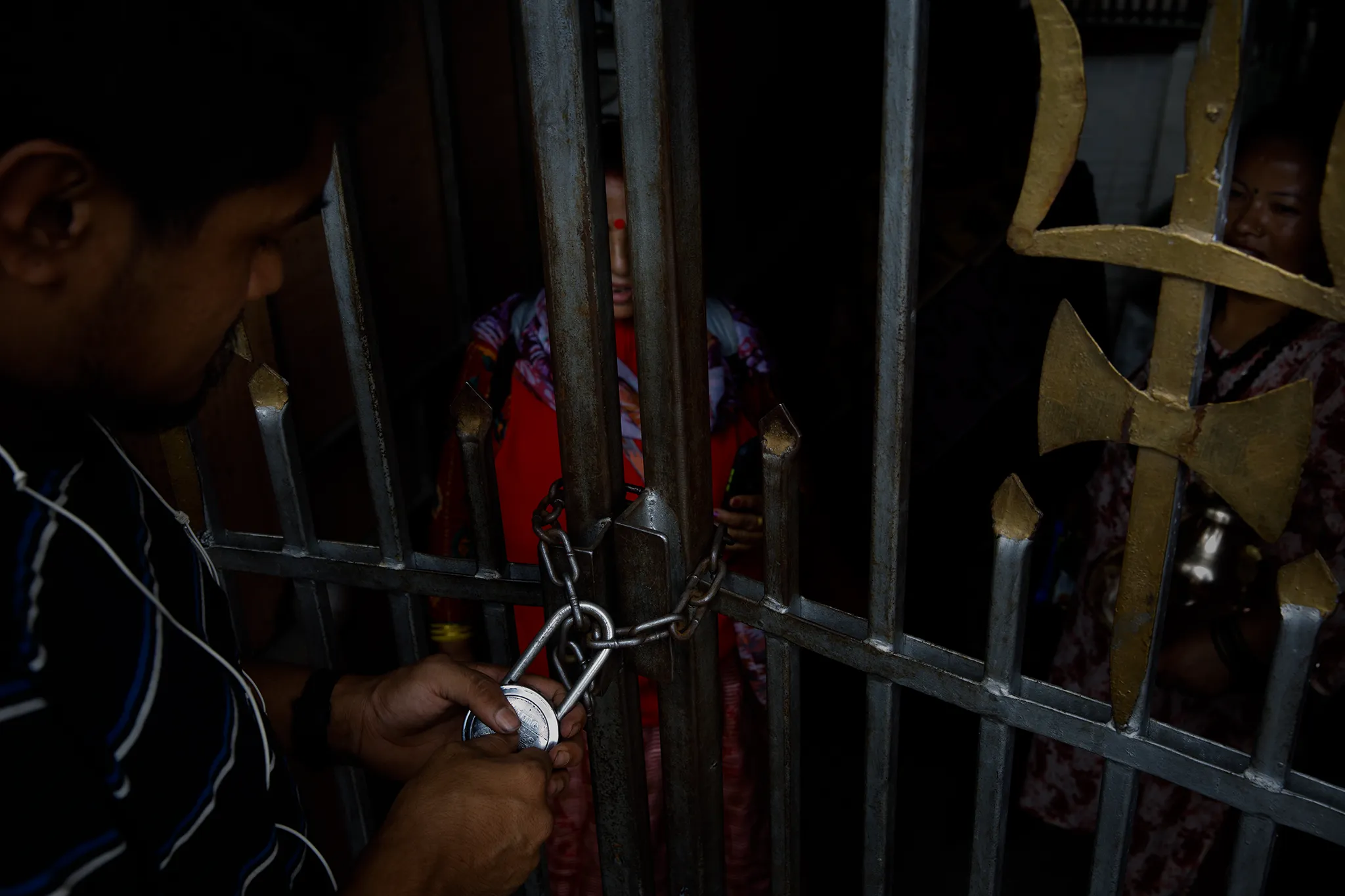
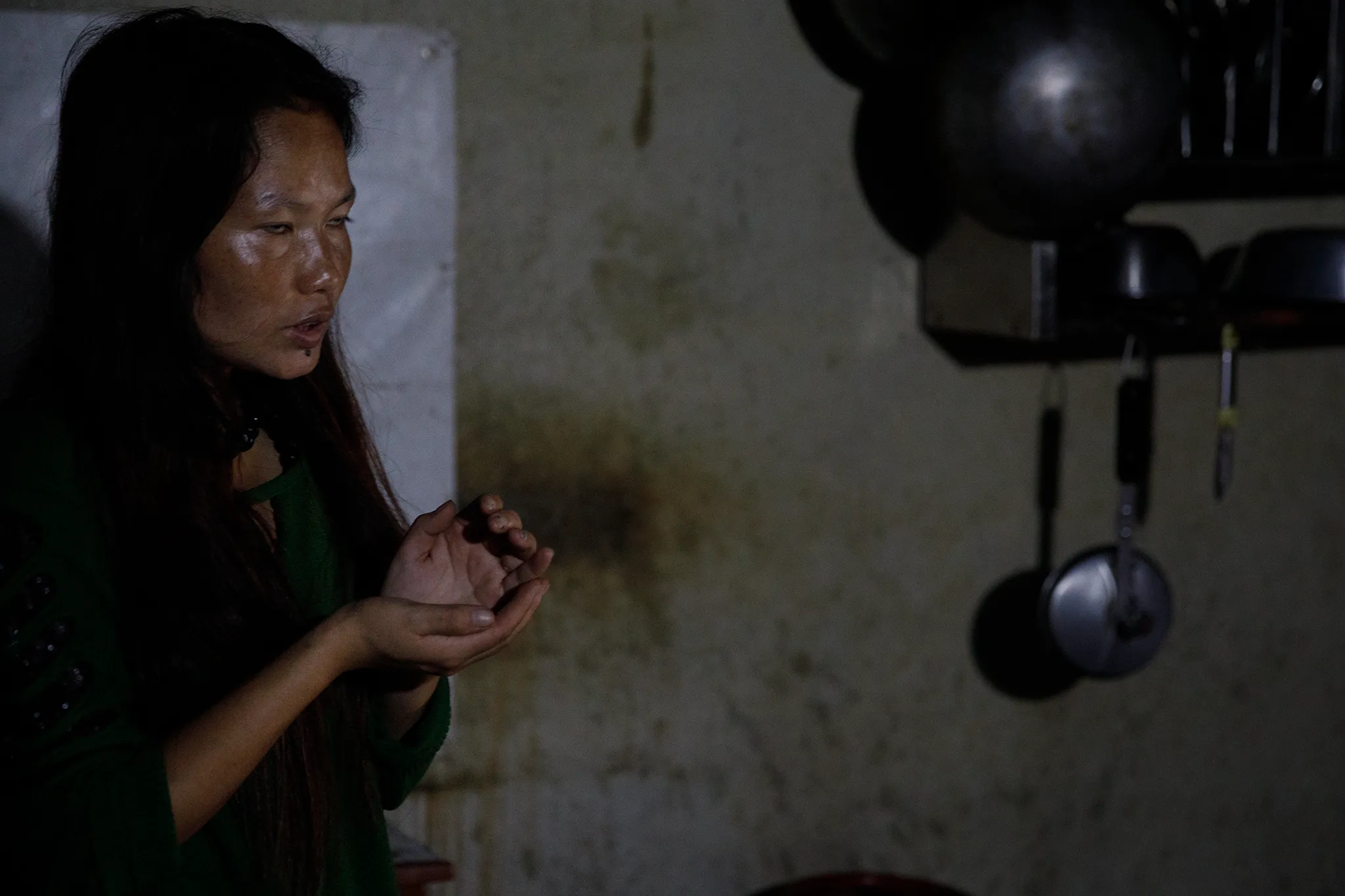
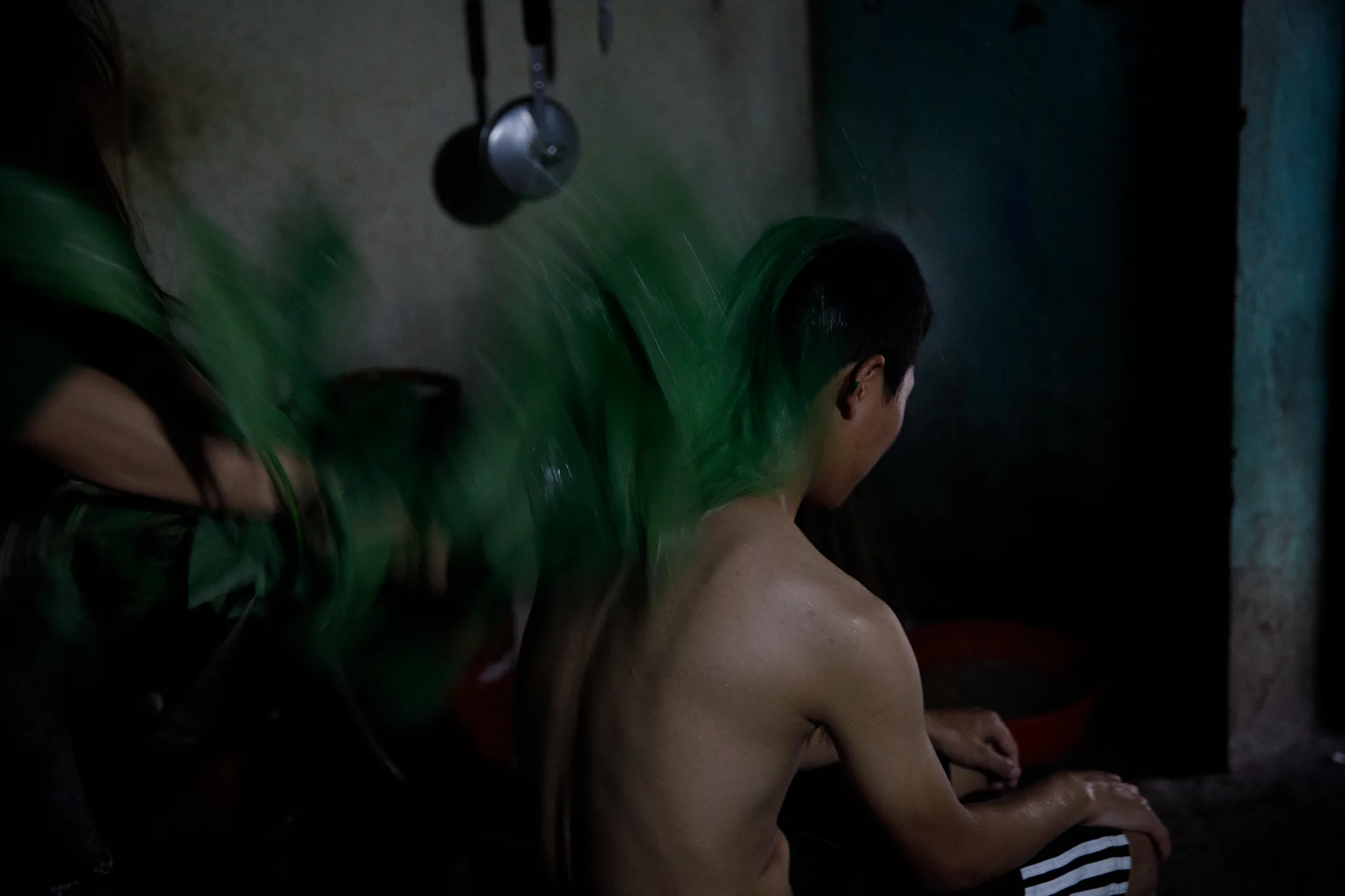
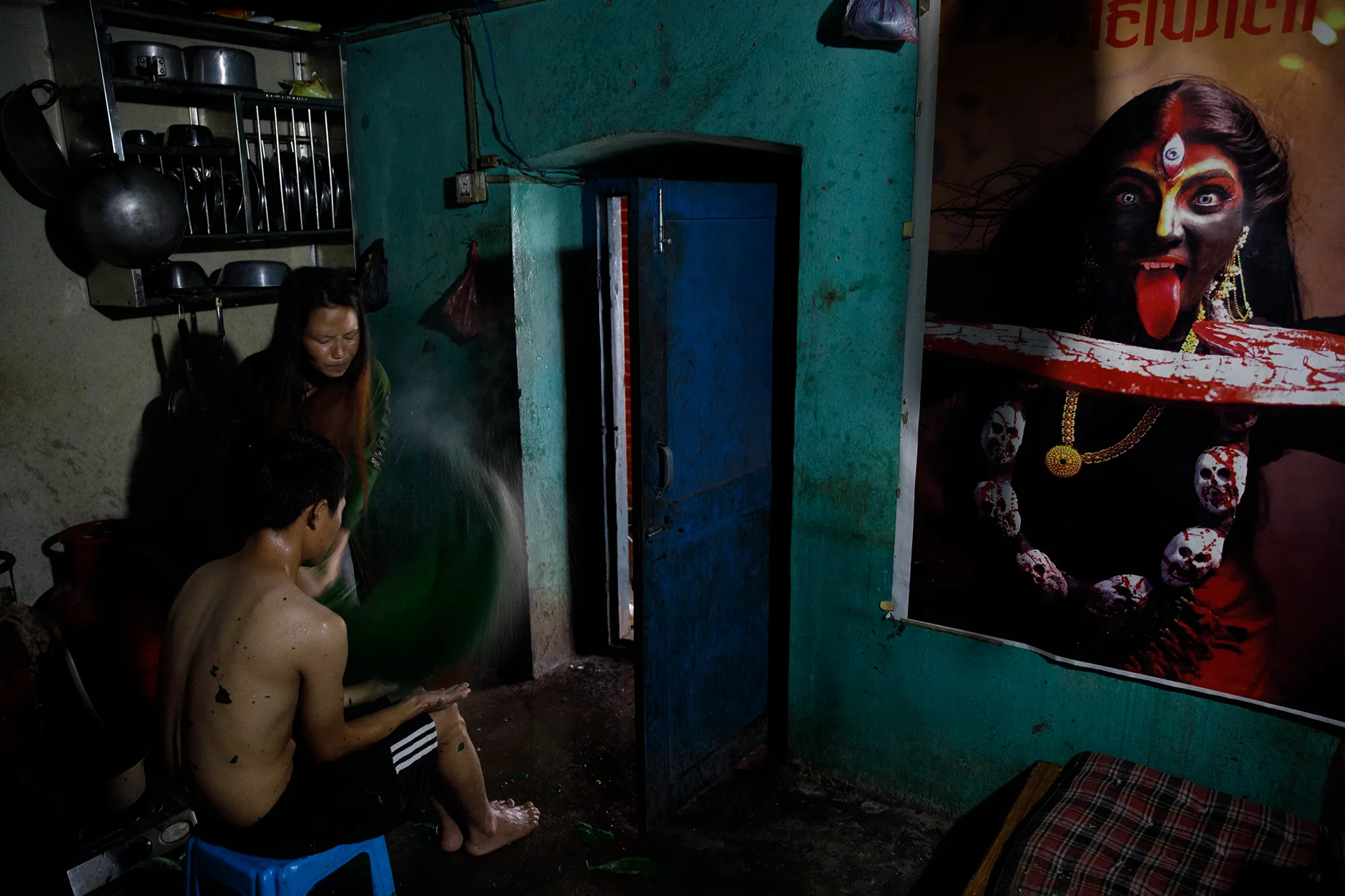
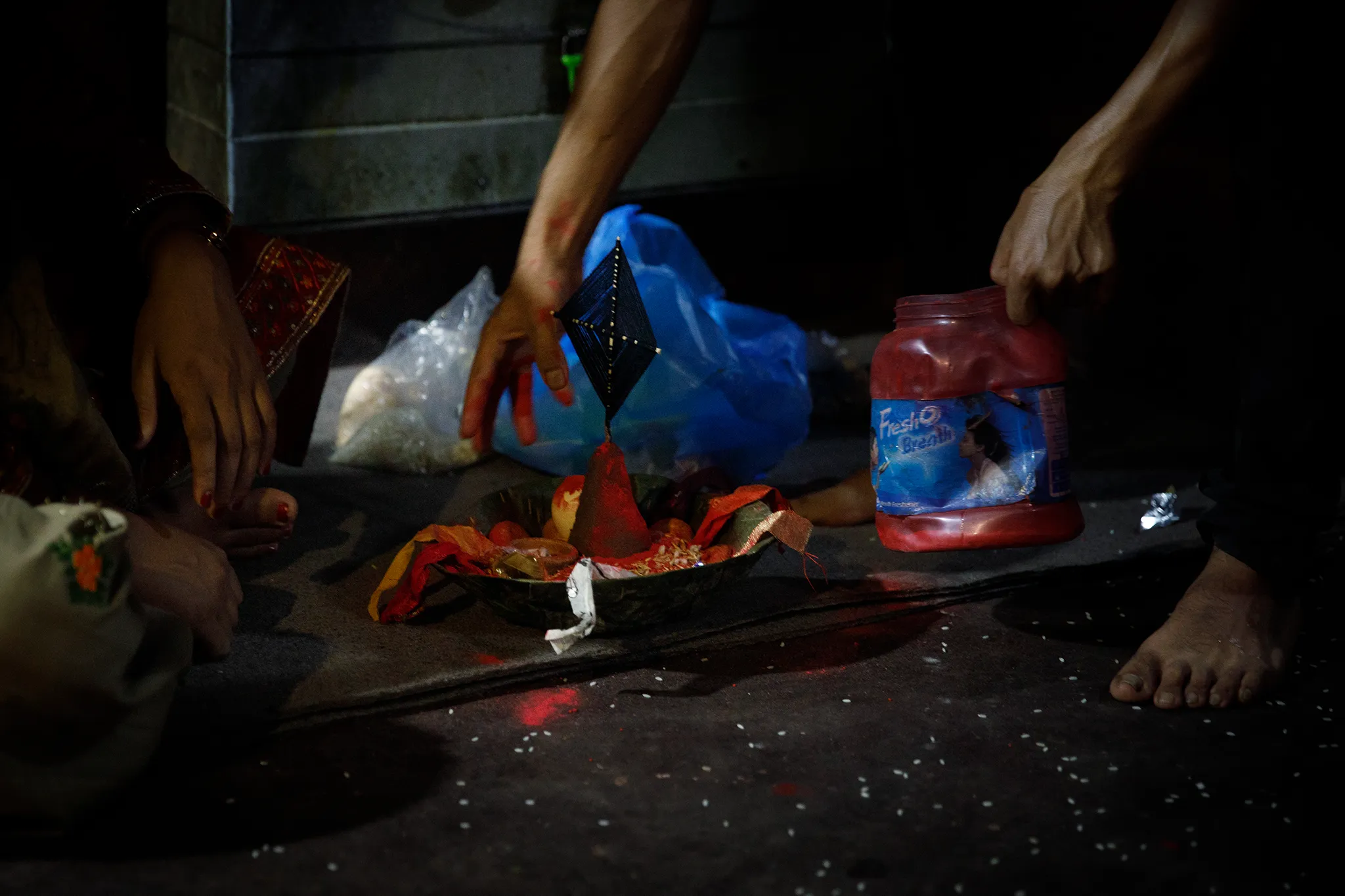
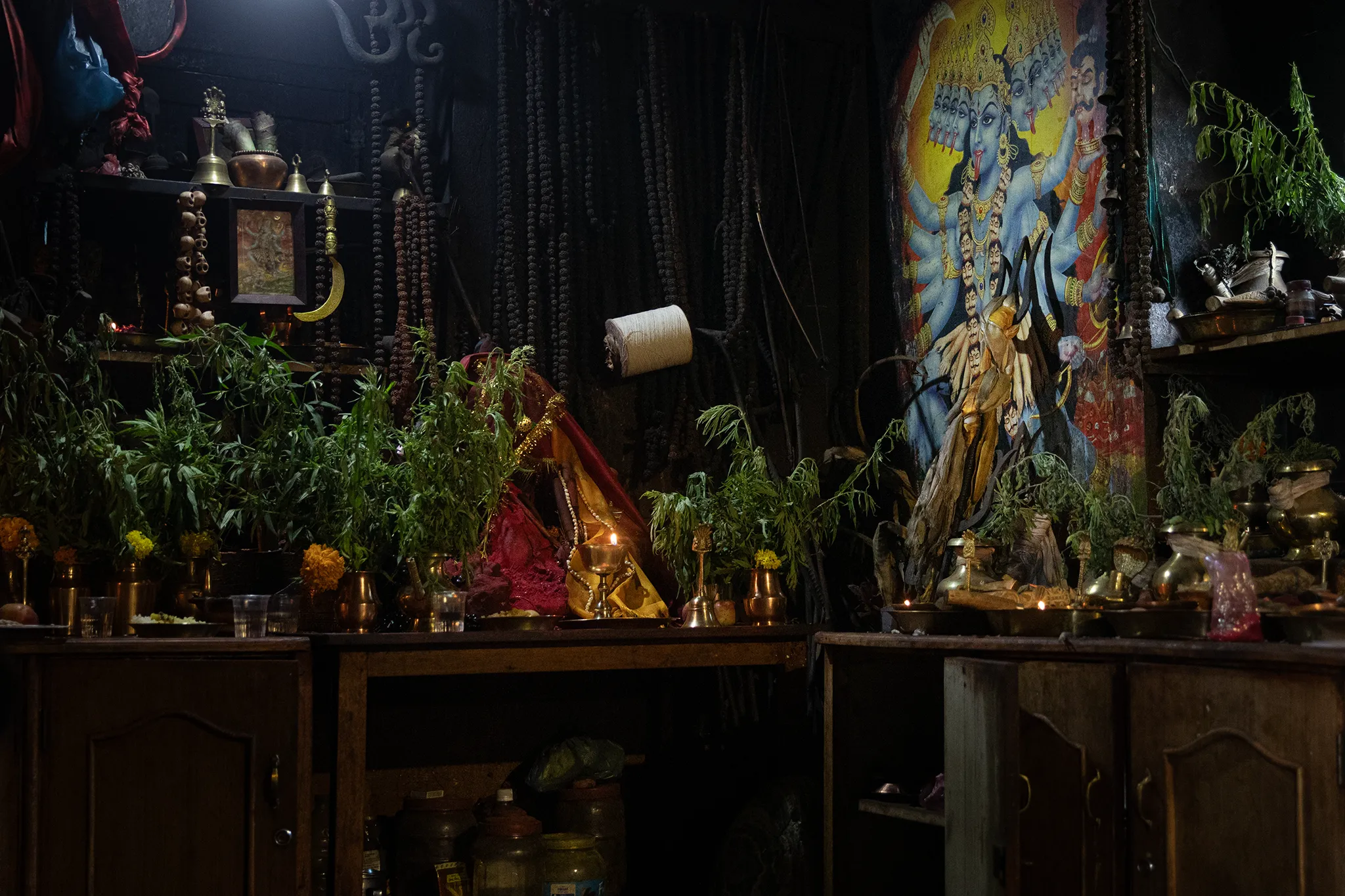
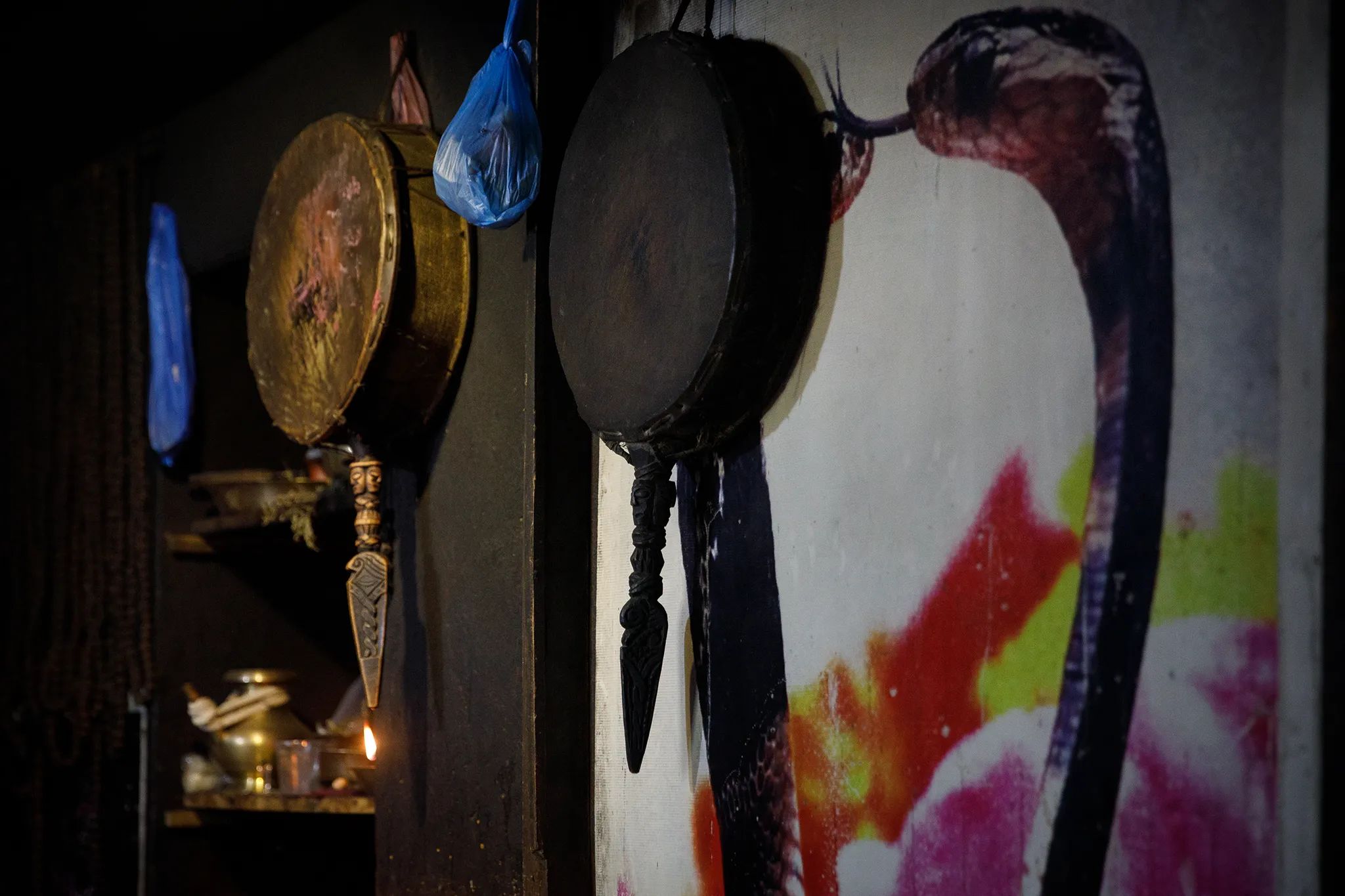
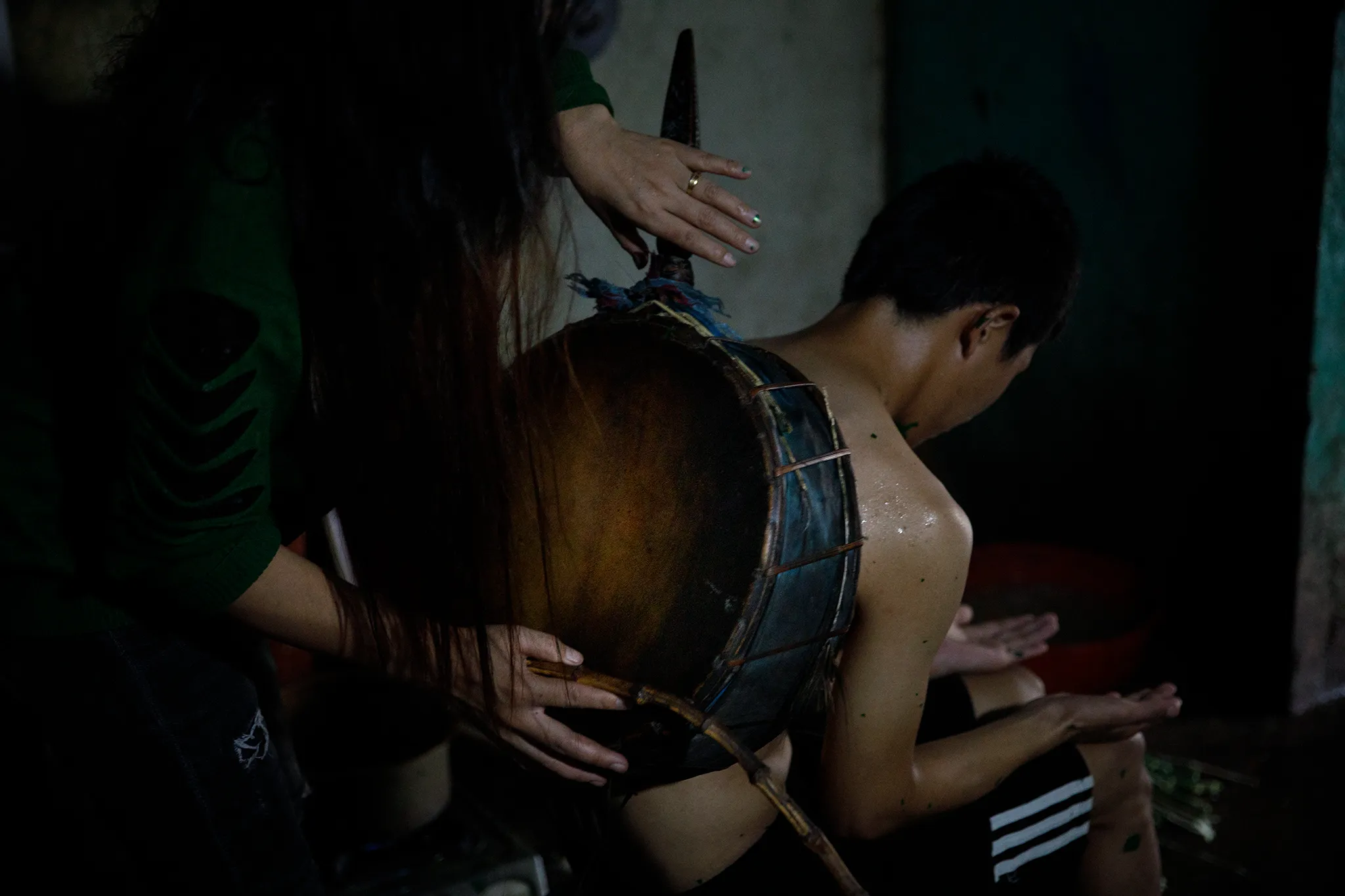
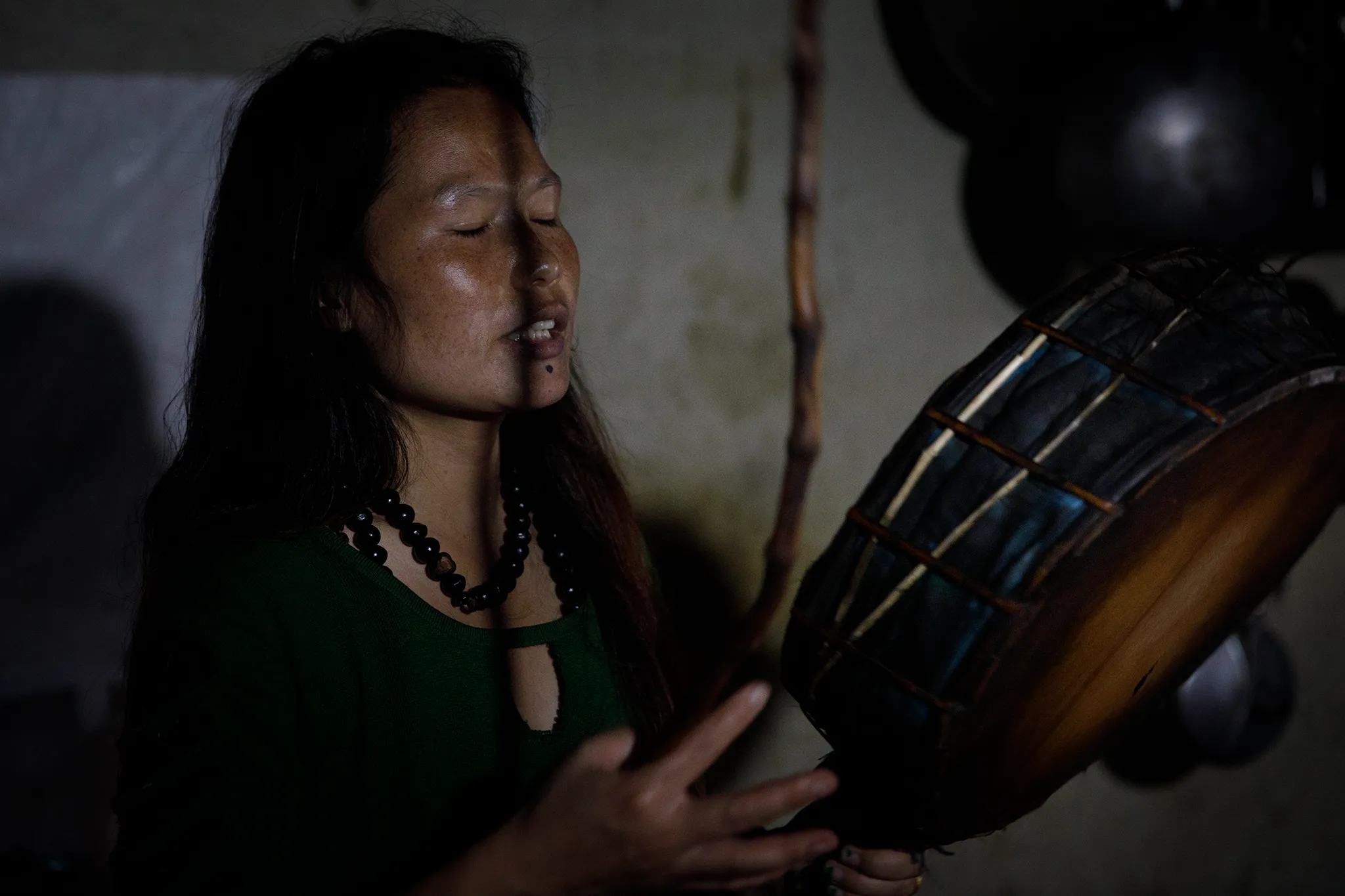
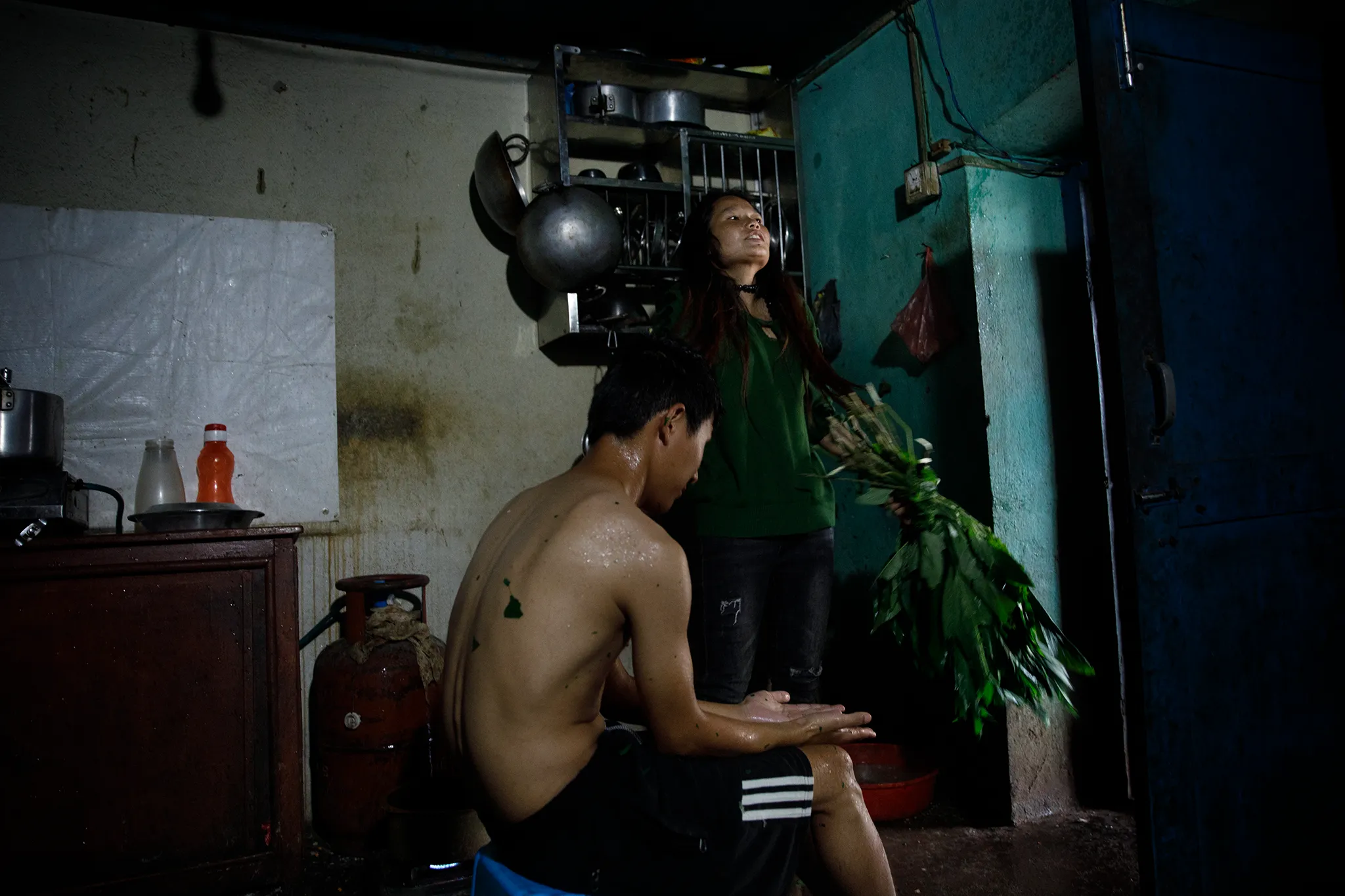
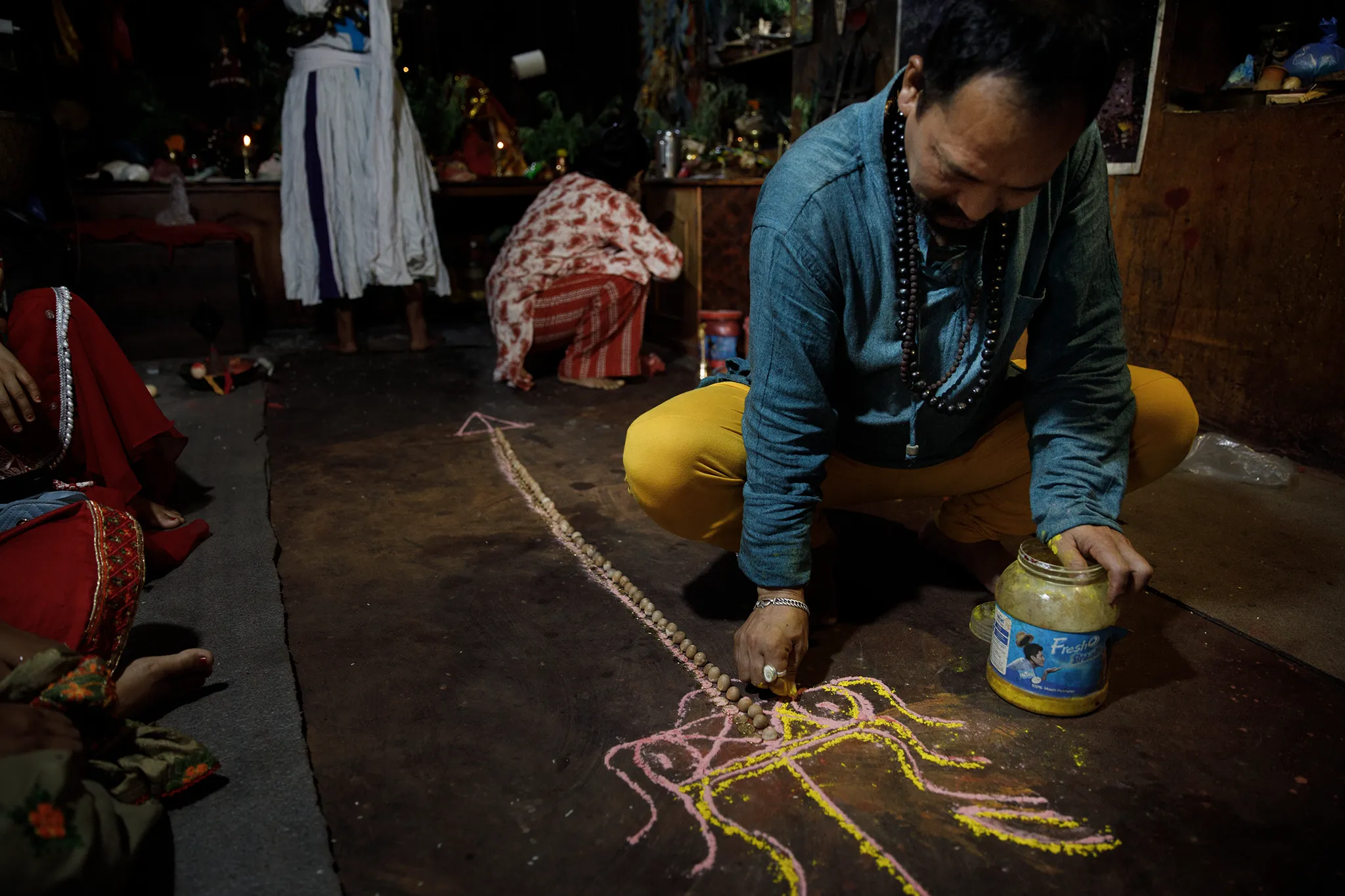
Shamanism in Nepal is a spiritual tradition led by the Jhankris, who use chants, mantras and the deep rhythm of drums to reach states of trance and communicate with the spiritual world. Food offerings, coloured powders and natural elements create an intensely sensory atmosphere, where every detail carries meaning: to give thanks, to purify, to establish balance between the human and the divine.
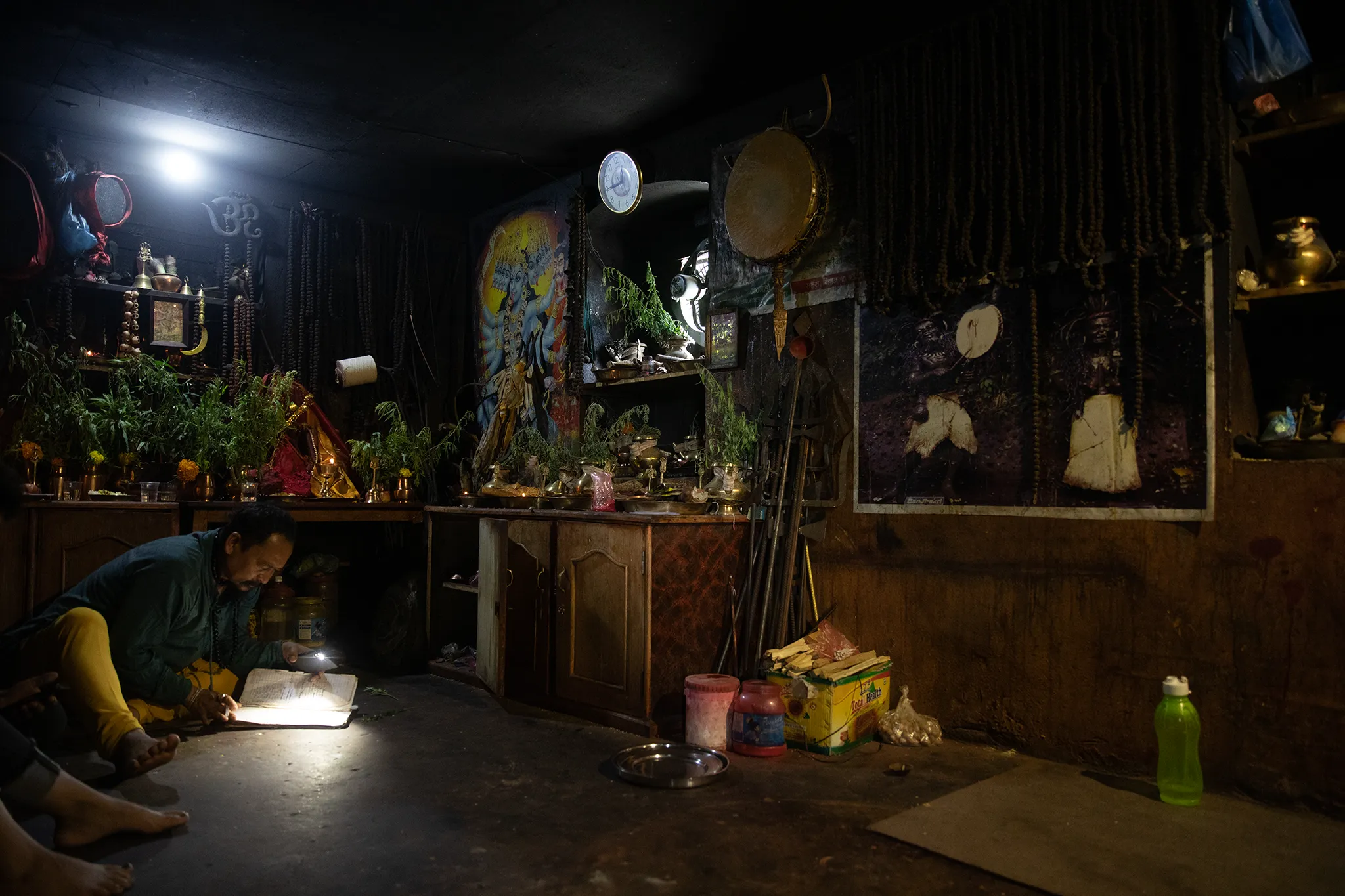
While I was in Nepal working on photojournalistic assignments for several newspapers, I asked a fellow journalist to make contact and obtain permission for me to attend and photograph a complete ritual in Kathmandu. After many attempts, we succeeded. At first, I had to sit against the wall like everyone else present, and could only photograph from there. Over time, as people grew accustomed to my presence and my camera, I gained more freedom of movement. For the final ritual, they placed a chair in the middle of the room for me to photograph from.
It is this kind of access that changes everything in documentary photography — not just being present, but being accepted.
Shamanic Ritual is a documentary photography project produced in Kathmandu, Nepal, about the ancestral shamanic practices of the Jhankris — the Nepalese shamans.
Shamanism in Nepal is a spiritual tradition led by the Jhankris, who use chants, mantras and the deep rhythm of drums to reach states of trance and communicate with the spiritual world. Food offerings, coloured powders and natural elements create an intensely sensory atmosphere, where every detail carries meaning: to give thanks, to purify, to establish balance between the human and the divine.
While I was in Nepal working on photojournalistic assignments for several newspapers, I asked a fellow journalist to make contact and obtain permission for me to attend and photograph a complete ritual in Kathmandu. After many attempts, we succeeded. At first, I had to sit against the wall like everyone else present, and could only photograph from there. Over time, as people grew accustomed to my presence and my camera, I gained more freedom of movement. For the final ritual, they placed a chair in the middle of the room for me to photograph from.
It is this kind of access that changes everything in documentary photography — not just being present, but being accepted.