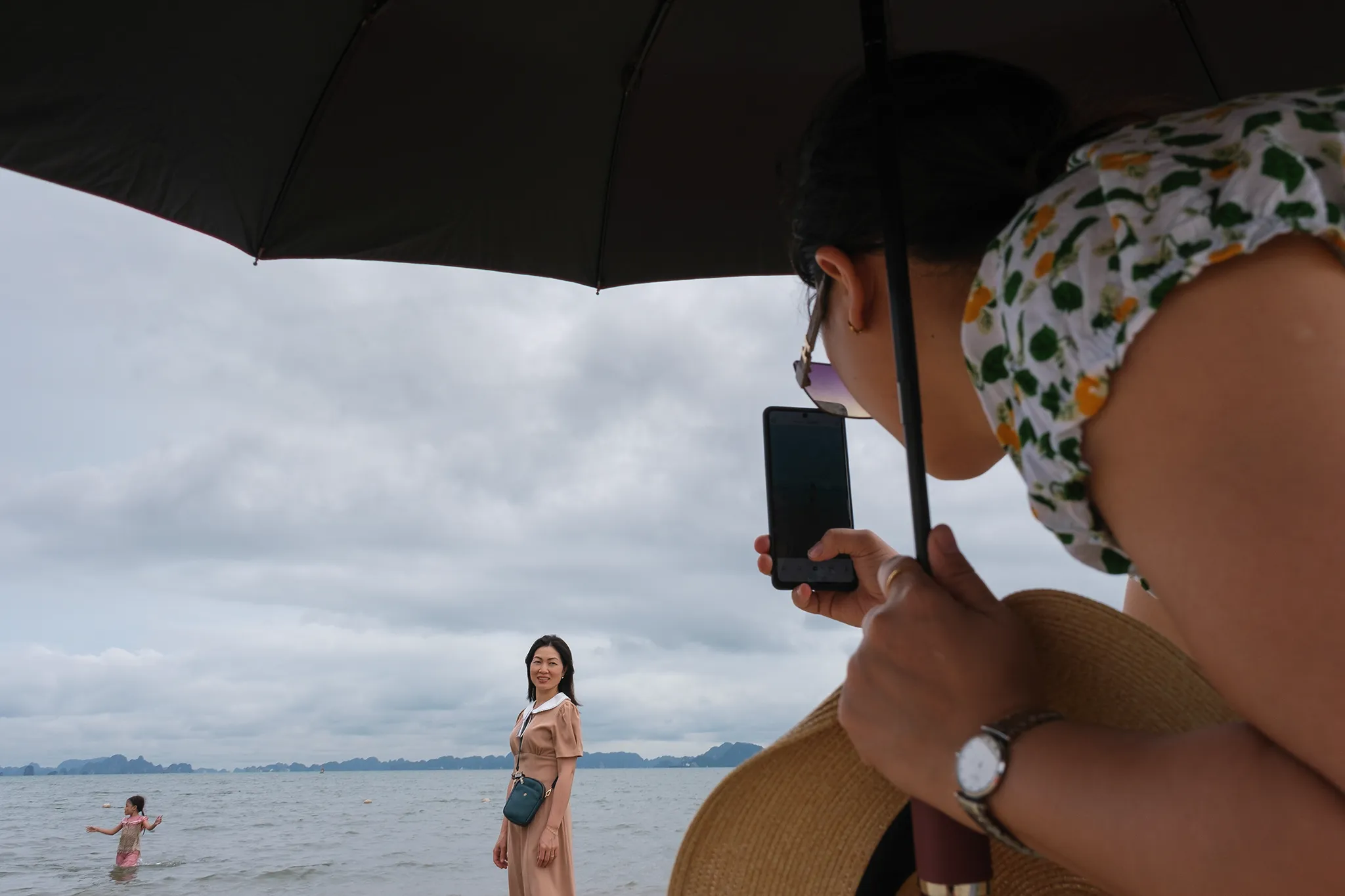
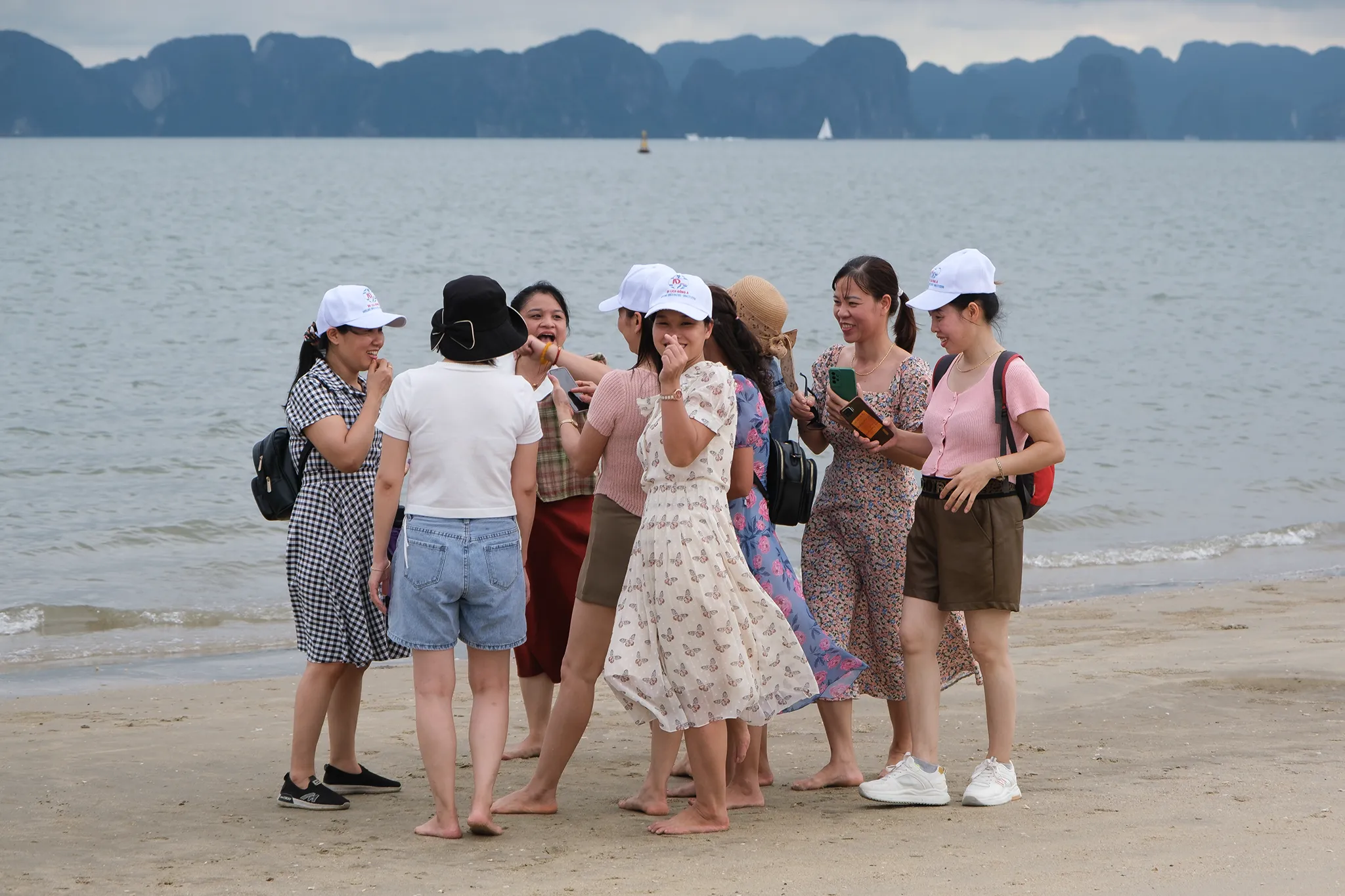
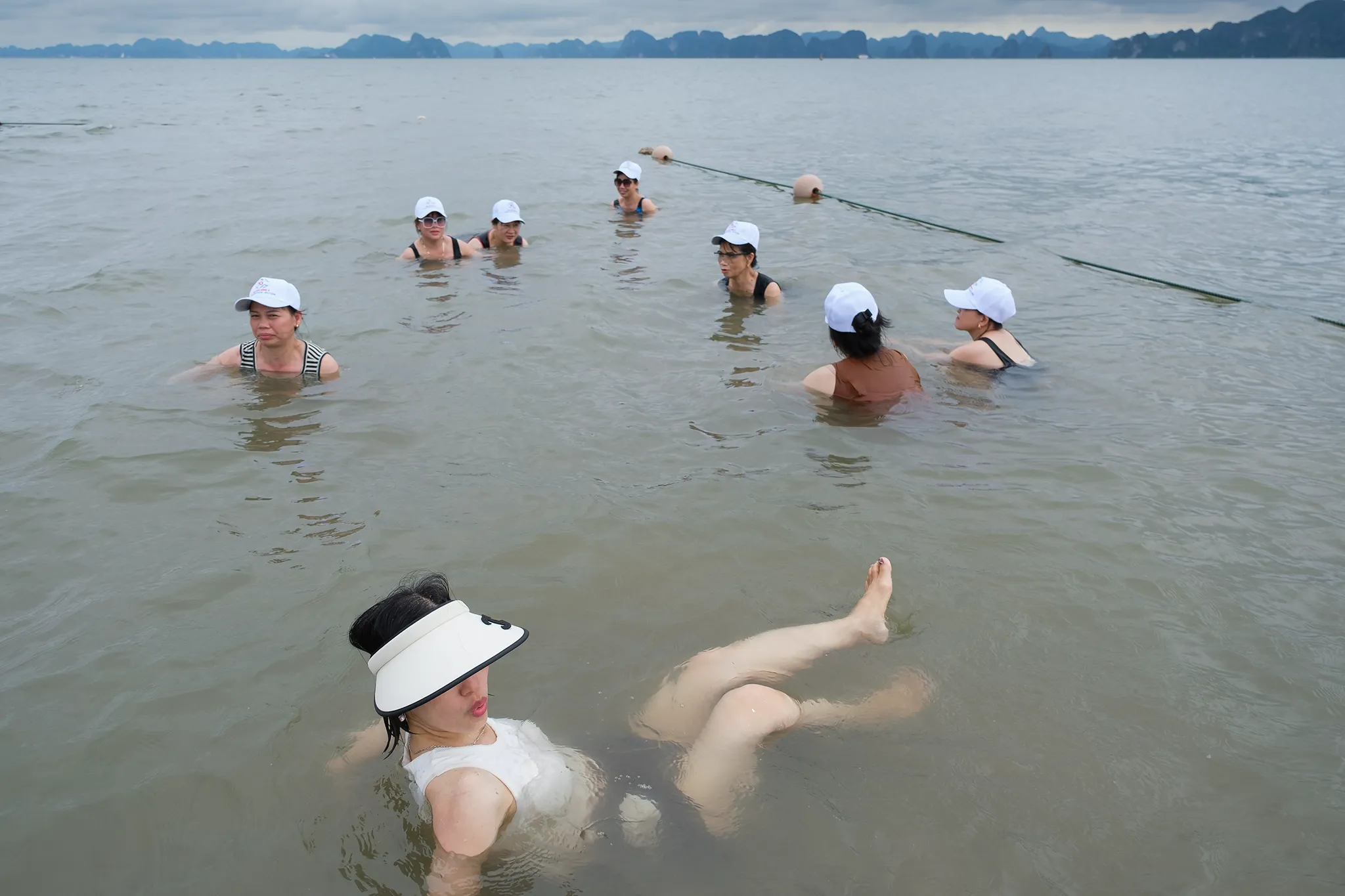
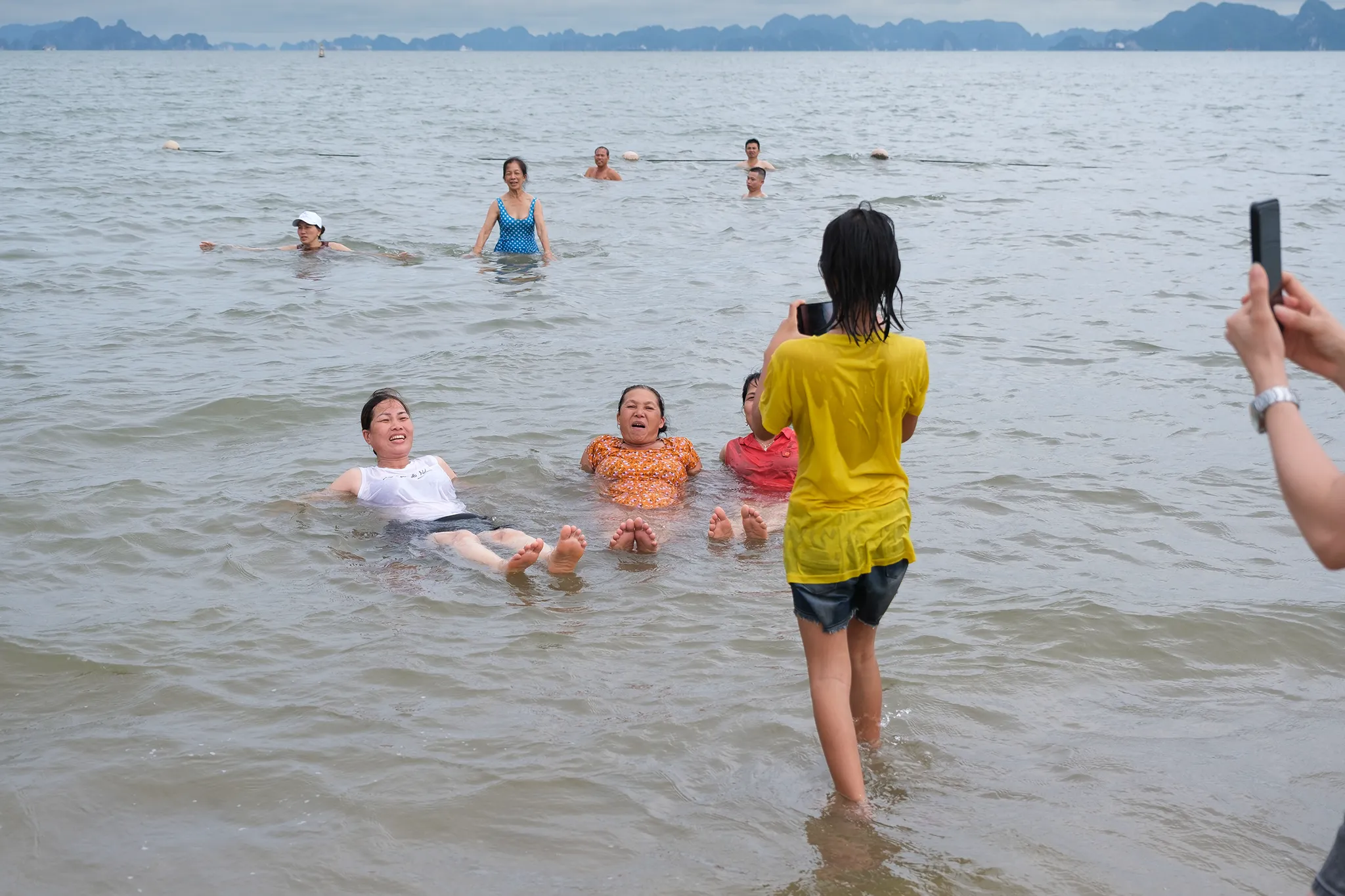
In Vietnam, on a beach in Ha Long Bay, I watched entire families experiencing a moment — through a screen. The more I observed, the more one simple thing unsettled me: nobody seemed to really be there. I went to photograph.
Seaside Harmony is a documentary photography project produced in Ha Long Bay, Vietnam, about contemporary visual culture and the way we document — and lose — the moments we live.
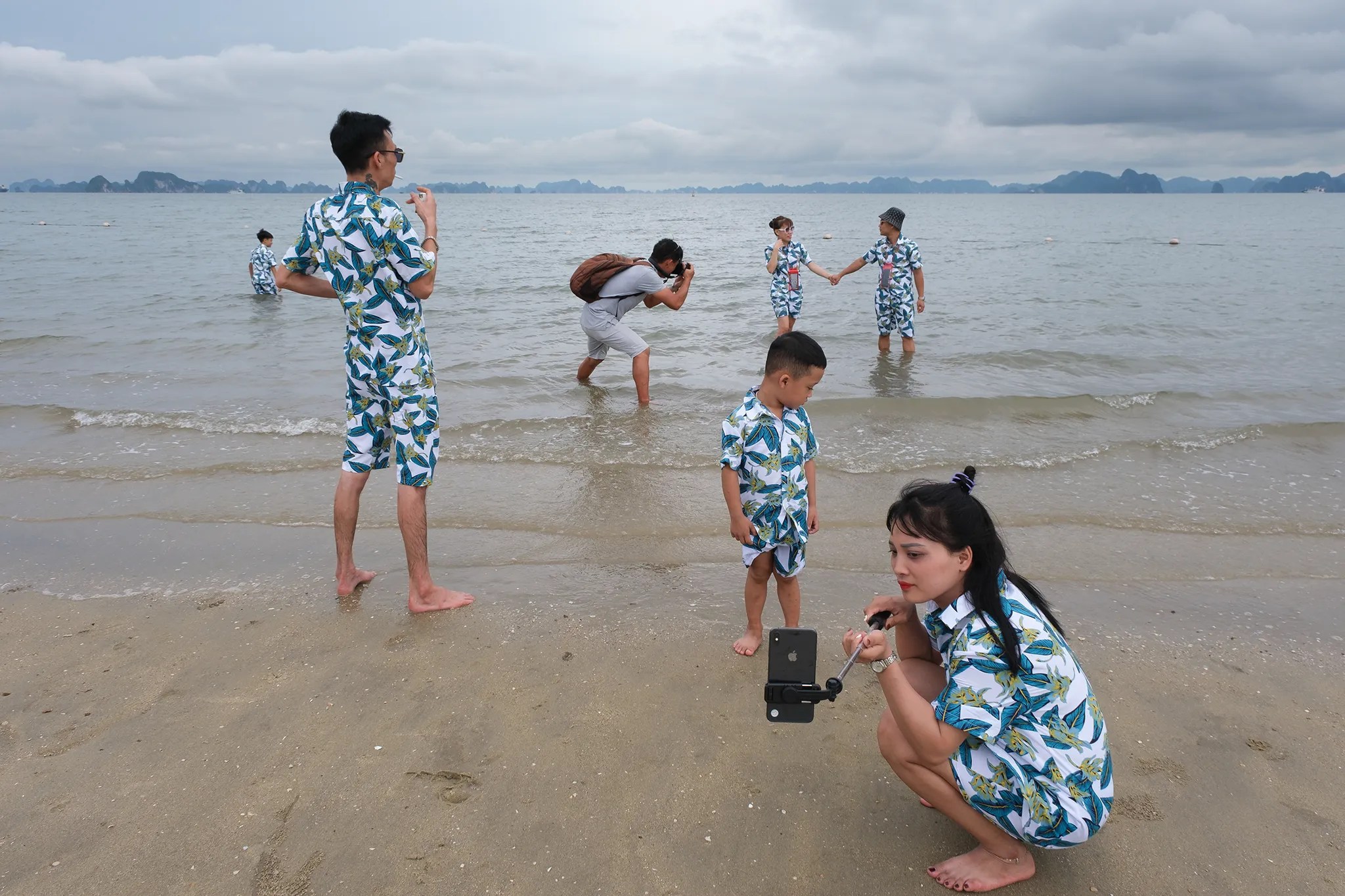
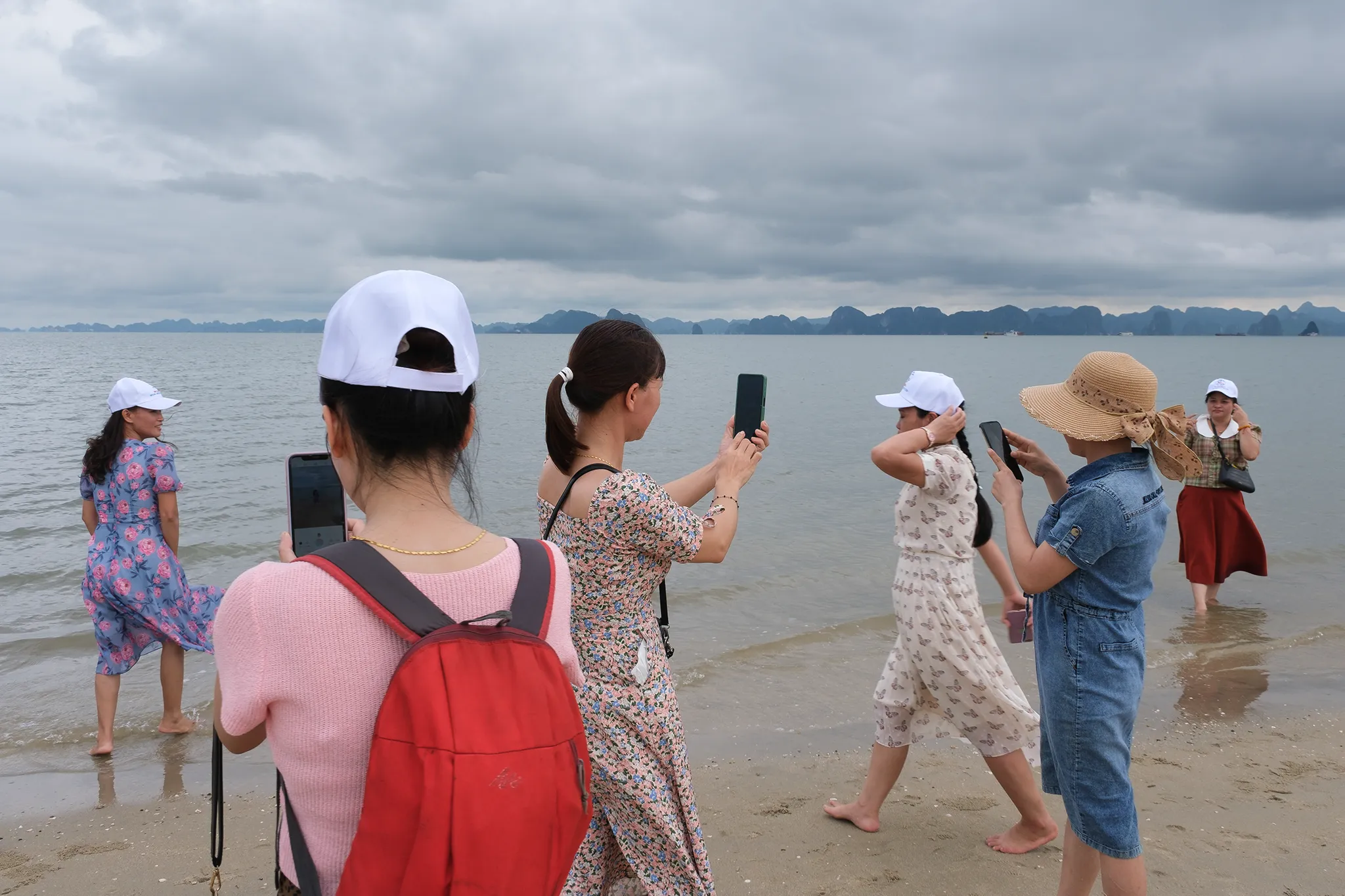
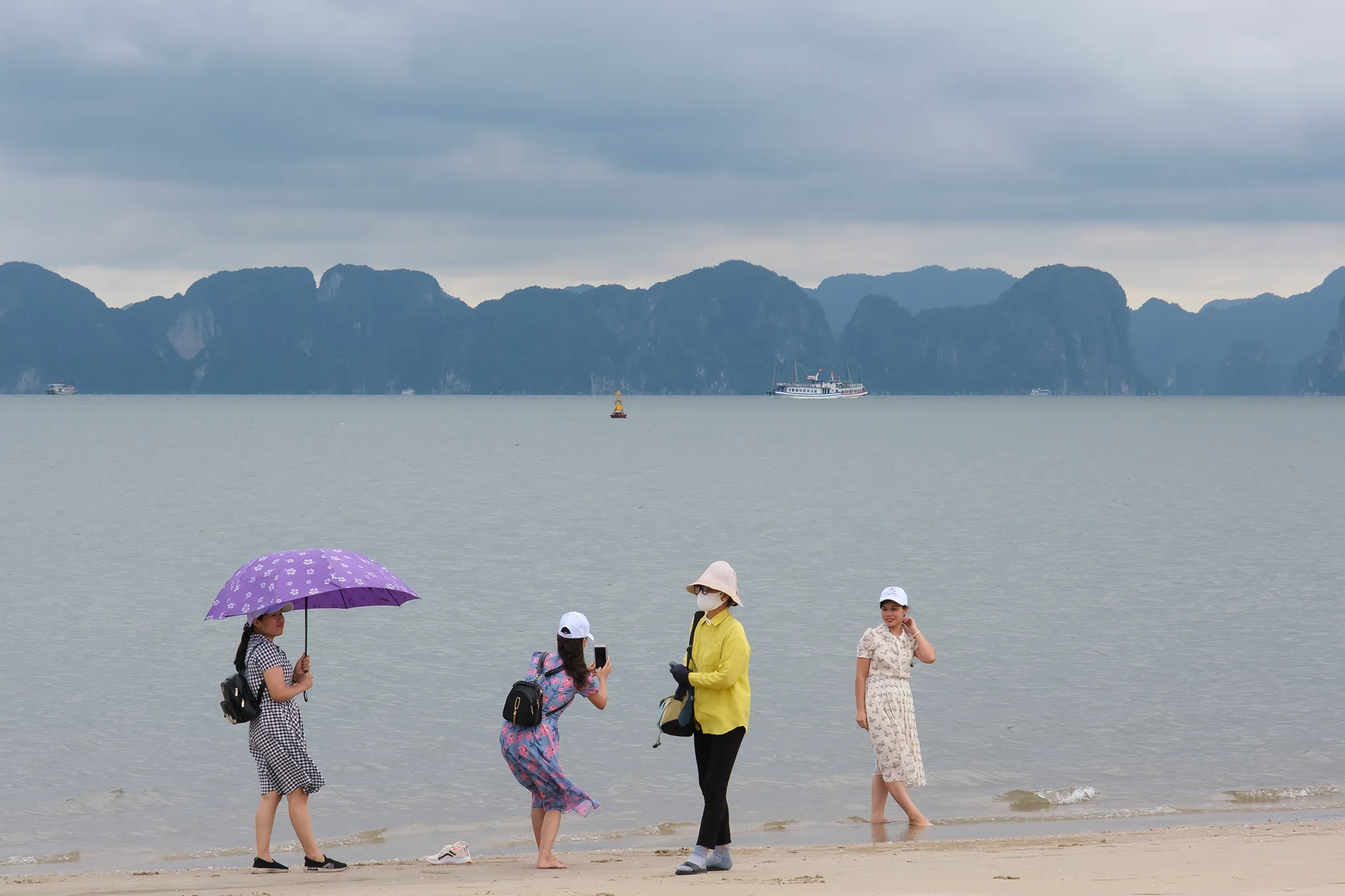
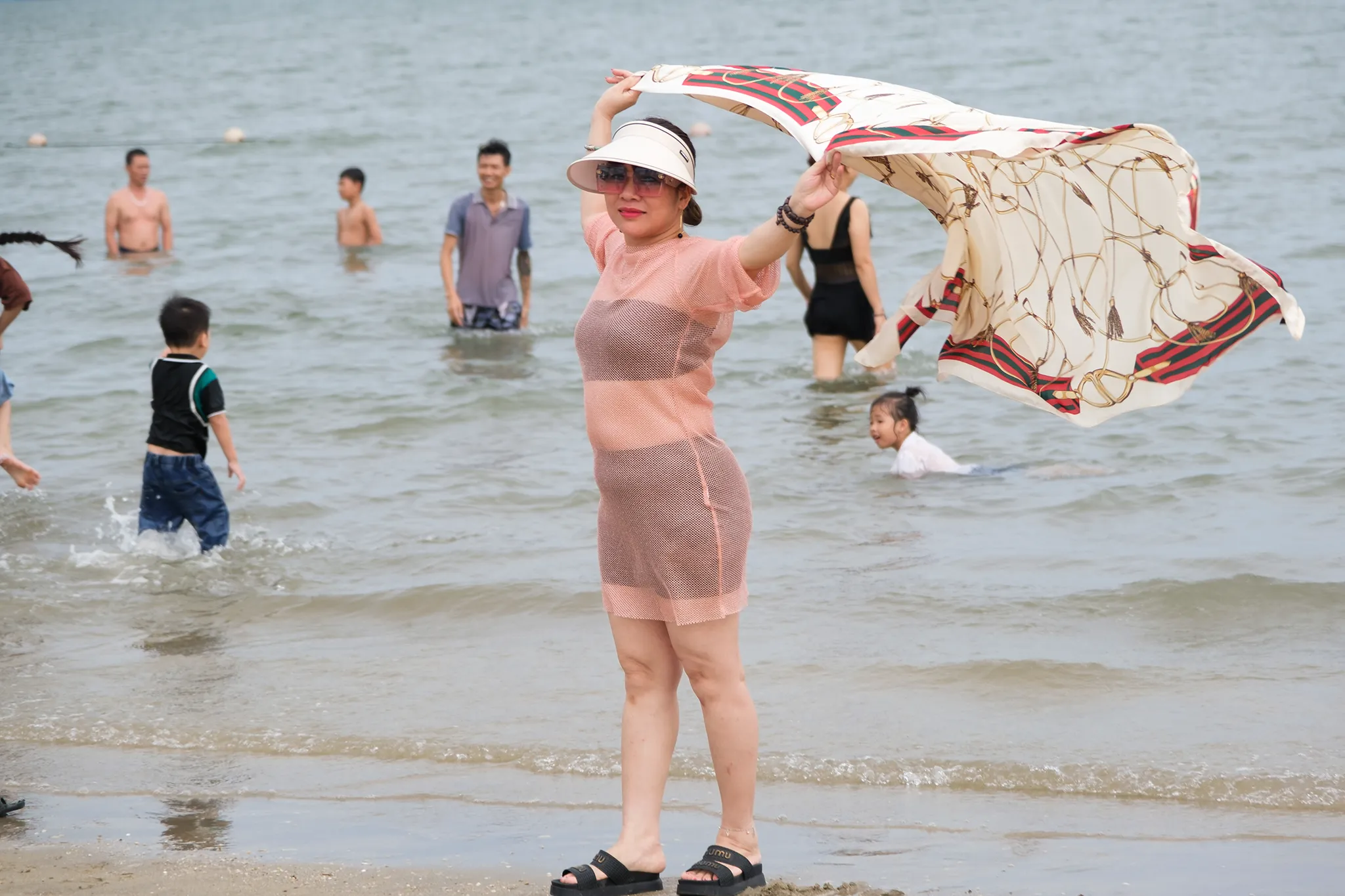
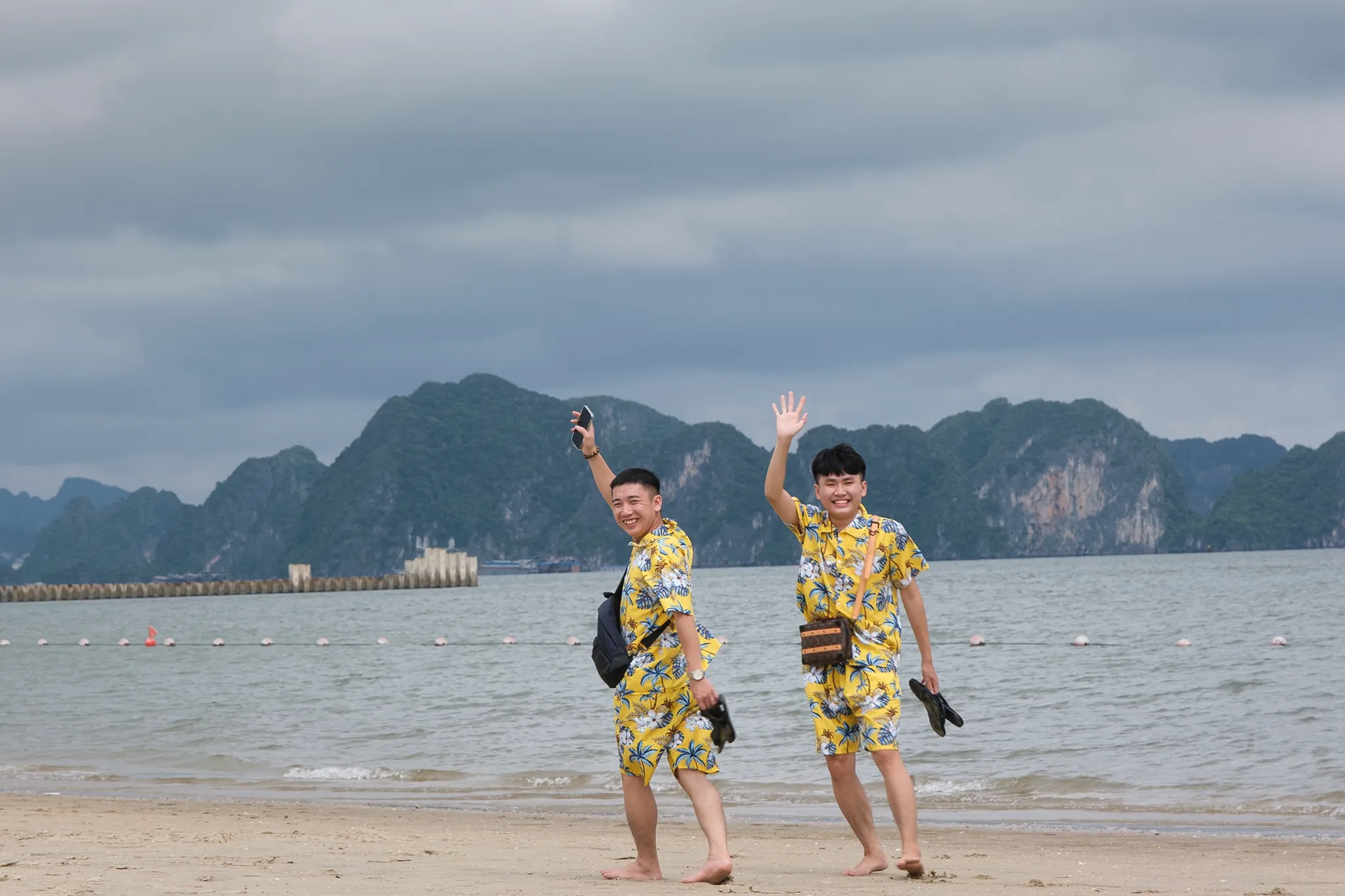
It was an ordinary afternoon in this iconic Vietnamese bay. Entire families dressed identically, positioned as a group, repeating poses while mobile phones and cameras recorded every rehearsed movement. Along the beach, the coordinated outfits created harmonious compositions that contrasted with the limestone islands in the background — and there was something simultaneously beautiful and unsettling about it.
I stood and watched. And the more I watched, the more one simple thing unsettled me: nobody seemed to really be there.
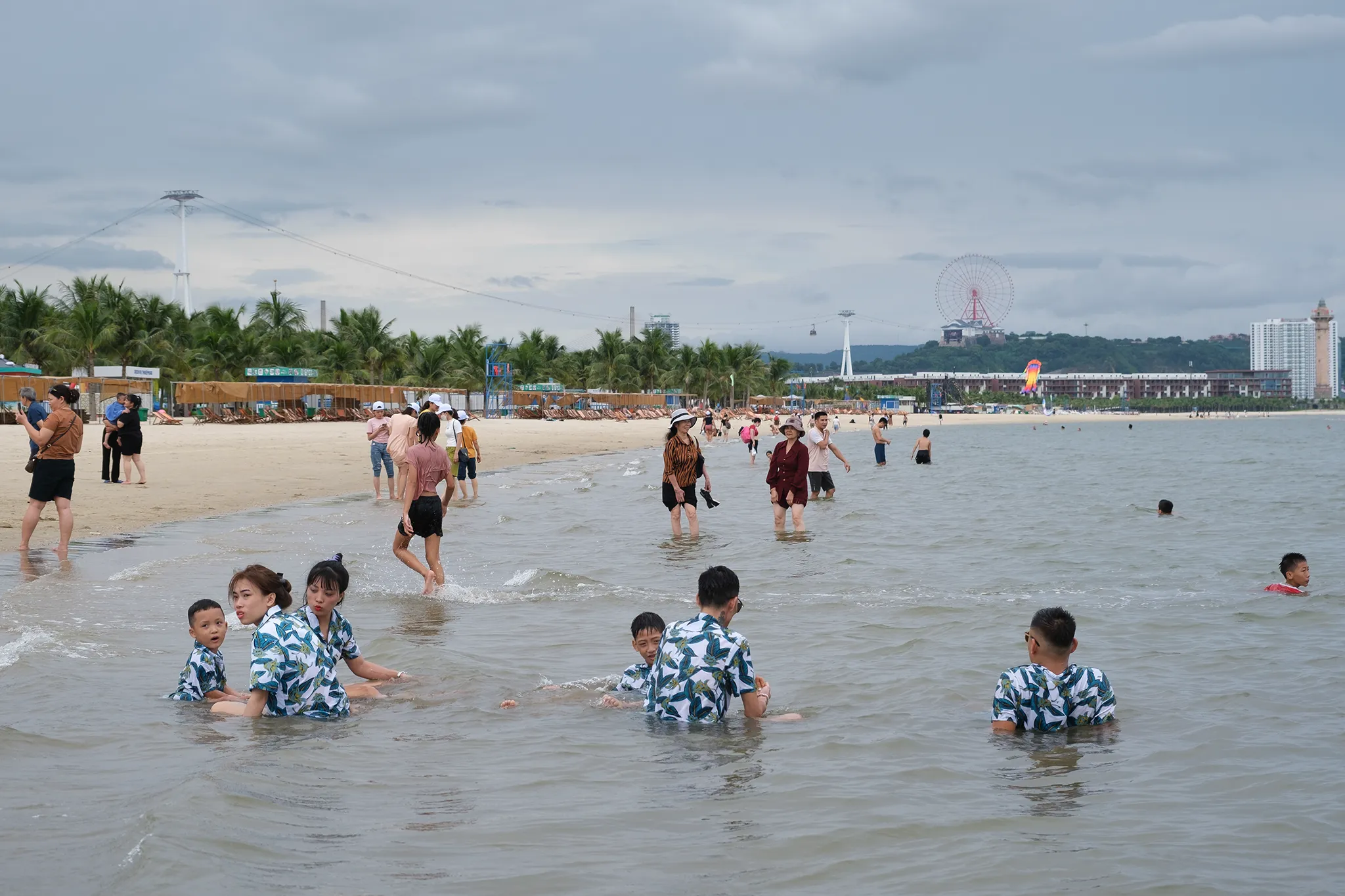
The moment that should have been one of connection — of presence, of genuine bonding — had been replaced by a choreography. Spontaneous moments, such as bathers entering the sea still dressed in city clothes, revealed the encounter between urban everyday life and the maritime environment. But even those moments ended up captured, archived, published.
This is the paradox I am interested in documenting: not the technology itself, but what we do with it. The way we transform real experiences into curated content — and how, in that process, we lose precisely what we went looking for.
This work was awarded the BIFA 2024 — Bronze in the People/Lifestyle category and the Lensculture Critics’ Choice 2024.
In Vietnam, on a beach in Ha Long Bay, I watched entire families experiencing a moment — through a screen. The more I observed, the more one simple thing unsettled me: nobody seemed to really be there. I went to photograph.
Seaside Harmony is a documentary photography project produced in Ha Long Bay, Vietnam, about contemporary visual culture and the way we document — and lose — the moments we live.
It was an ordinary afternoon in this iconic Vietnamese bay. Entire families dressed identically, positioned as a group, repeating poses while mobile phones and cameras recorded every rehearsed movement. Along the beach, the coordinated outfits created harmonious compositions that contrasted with the limestone islands in the background — and there was something simultaneously beautiful and unsettling about it.
I stood and watched. And the more I watched, the more one simple thing unsettled me: nobody seemed to really be there.
The moment that should have been one of connection — of presence, of genuine bonding — had been replaced by a choreography. Spontaneous moments, such as bathers entering the sea still dressed in city clothes, revealed the encounter between urban everyday life and the maritime environment. But even those moments ended up captured, archived, published.
This is the paradox I am interested in documenting: not the technology itself, but what we do with it. The way we transform real experiences into curated content — and how, in that process, we lose precisely what we went looking for.
This work was awarded the BIFA 2024 — Bronze in the People/Lifestyle category and the Lensculture Critics’ Choice 2024.